Semrush Review (2026): Is It Too Much for a Small Business?
Semrush is built for SEO teams with dedicated analysts, not business owners trying to rank while running everything else. Here’s what it does and who it’s really for, plus a better alternative for you.
What Is Semrush?
Semrush is a business intelligence tool for SEO. You put in a domain or a keyword, and it shows you who ranks for what, which pages get traffic, where the technical issues hide, and what your competitors are doing.
It’s also driven by a massive database that maintains 27.5 billion keywords, 43 trillion backlinks, and 130+ million AI prompts.
What Semrush doesn’t do, however, is fix those problems for you. It’s a diagnostic tool, not a cure; you still have to write the content, apply the technical fixes, and build the actual SEO strategy yourself (or hire someone to do it for you).
❌ Semrush is a measurement tool. That’s where small businesses trip; the difference “knowing” and “doing” is exactly where SEO efforts stall.
What SEO Features Does Semrush Offer?
Semrush has 55+ tools. As a small business owner doing marketing, you’ll actually only use about five of them. Here’s what’s actually relevant.
Keyword Research
The Keyword Magic Tool is where most people start. You type in a seed keyword (e.g., “best coffee shop in Austin"), and Semrush returns thousands of related keywords with search volume, keyword difficulty scores, cost-per-click (CPC) data, and search engine results page (SERP) features.
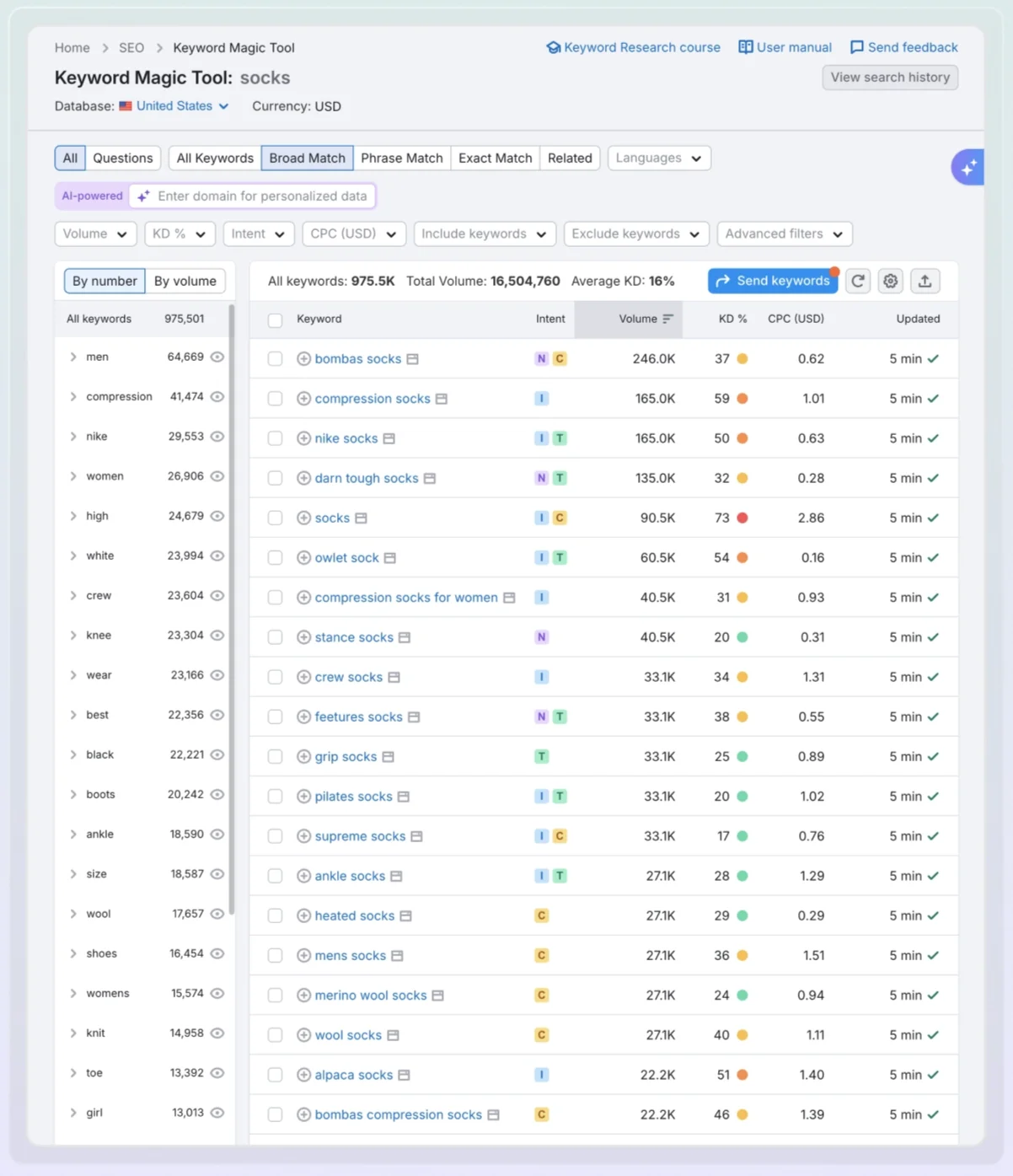
It's one of the best keyword databases available. The volume data isn't perfectly accurate (it's estimated, not sourced directly from Google), but it's reliable enough to make informed decisions.
The Keyword Gap tool is useful: it shows you which keywords your competitors rank for that you don't. That's a ready-made content roadmap without having to think through strategy yourself.
Site Audit
Semrush's crawler scans your website for 140+ technical and on-page issues, such as broken links, slow load times, missing meta tags, duplicate content, and mobile problems. It gives you a site health score and a prioritized list of issues to fix.
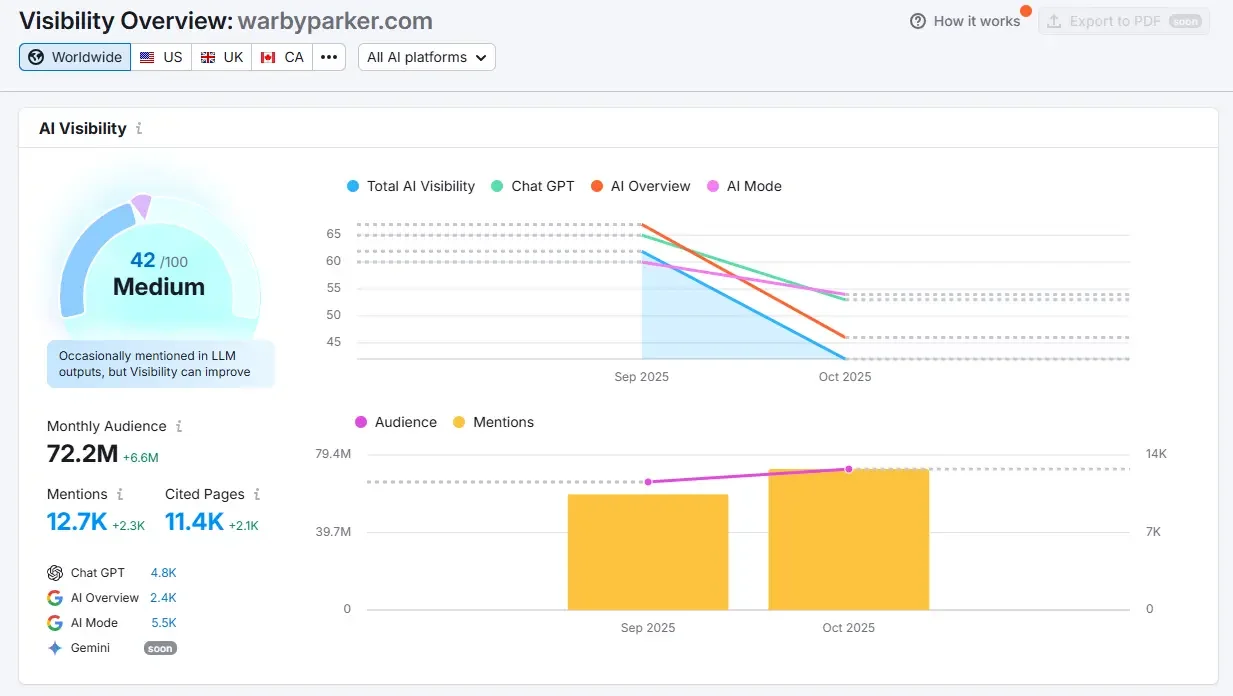
The audit touches on many aspects and the prioritization is helpful; it tells you what matters most rather than dumping everything on you at once.
❌ The starter SEO plan doesn't include JavaScript rendering. If your site runs on React, Angular, or heavy JavaScript frameworks, the crawler can't see behind the scripts properly. You might get a clean health score when the site actually has issues hiding in the JS layer. For serious technical audits, you need at least the Pro+ plan
Rank Tracking
Position Tracking monitors where your site ranks for specific keywords over time. You set up a project, add the keywords you care about, and Semrush tracks your position daily.
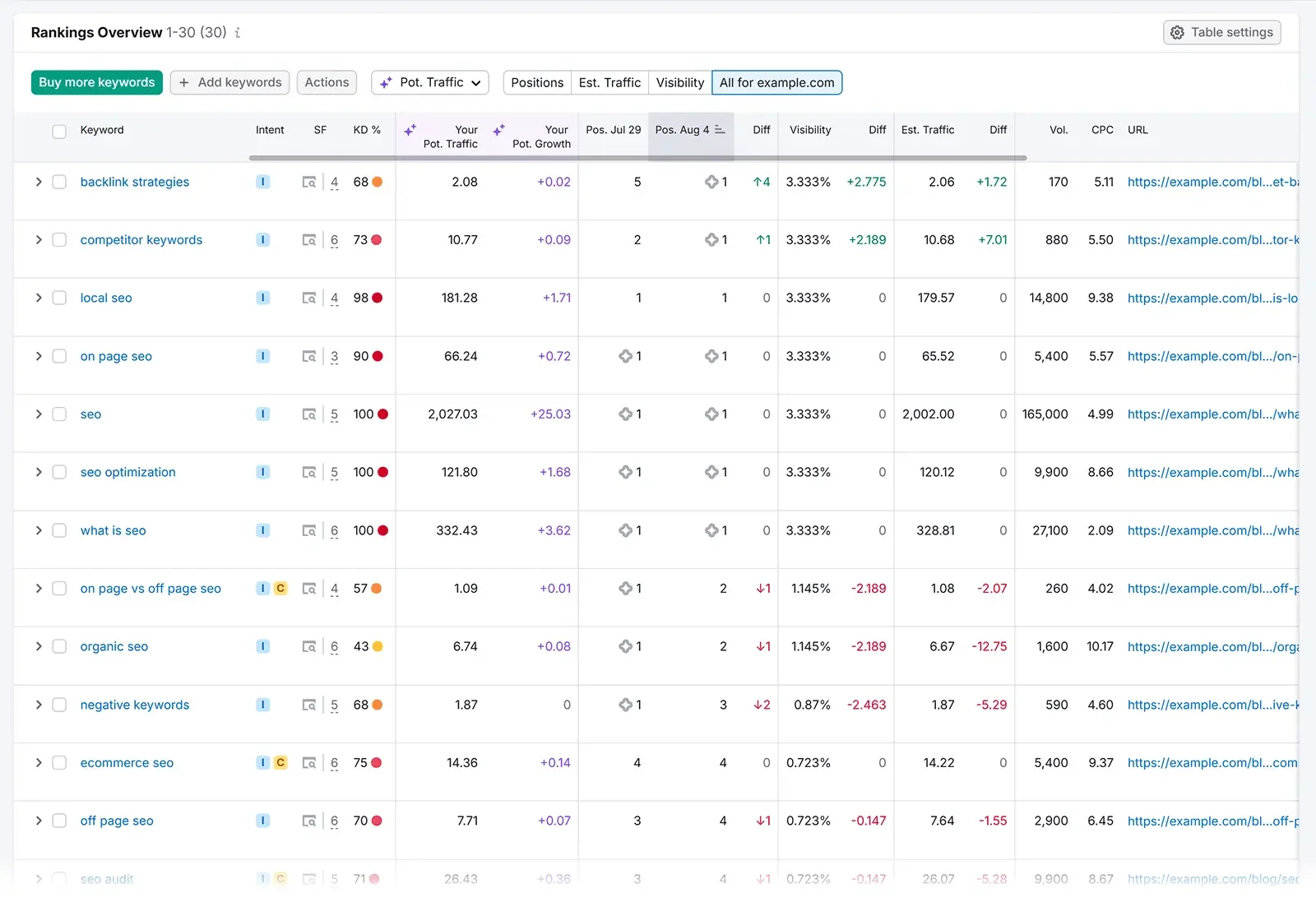
It also shows you SERP features, i.e., whether you’re appearing in featured snippets, knowledge panels, or local packs. This matters more than raw position for actual traffic.
Competitor Analysis
Type a competitor’s domain into Semrush and you can see their entire organic keyword profile, their top pages by traffic, their backlink sources, and their paid ad history.
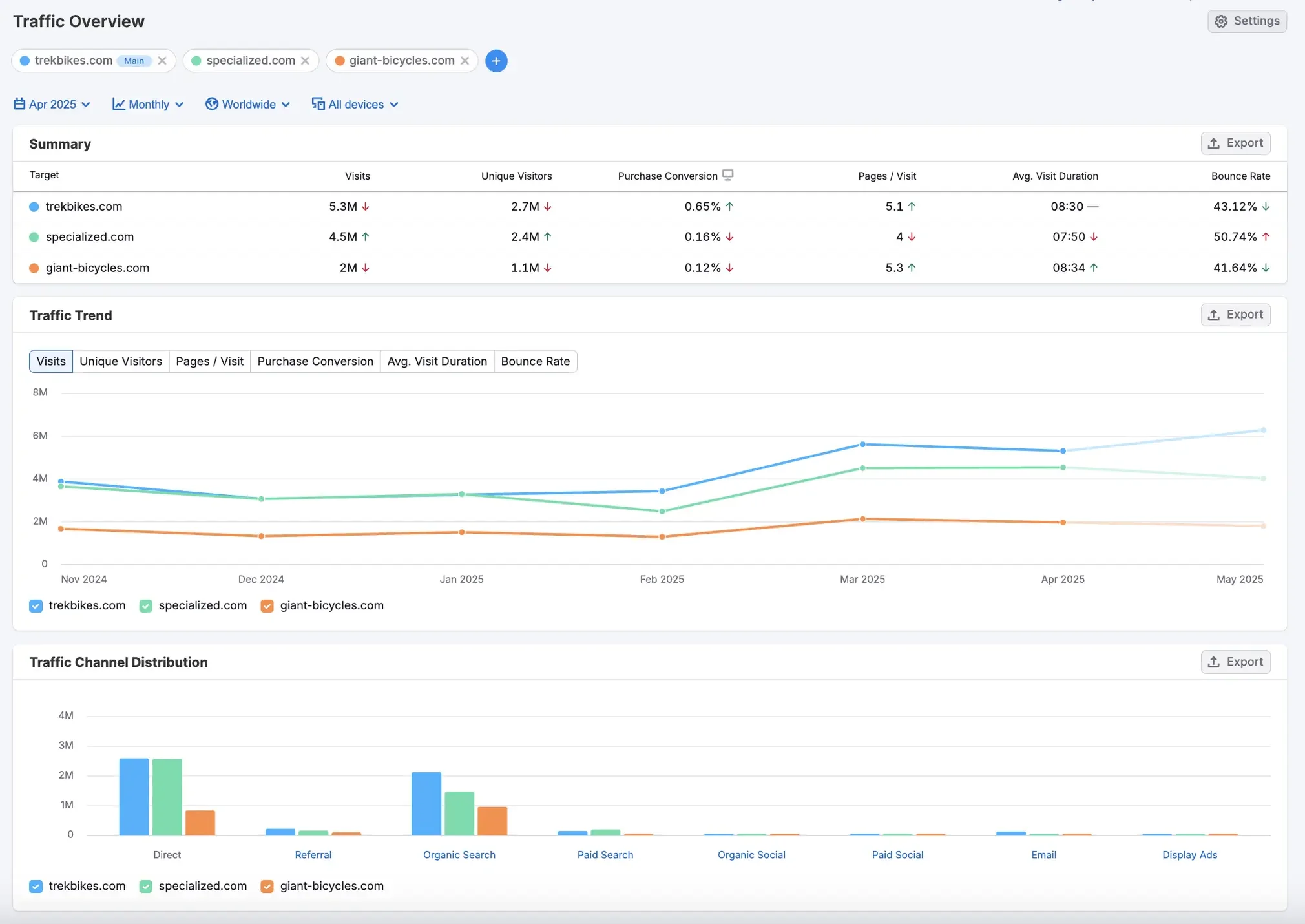
If you’re trying to understand why a competitor is ranking about you, this is genuinely illuminating. The Organic Search report is one of the most useful things Semrush does.
AI Visibility Tracking
Semrush recently launched an AI visibility toolkit that tracks how your brand appears in AI-generated answers (ChatGPT, Google AI Overviews, and Gemini). It monitors brand mentions, citation rates, sentiment, and share of voice across these platforms.
If you’re paying attention to GEO (Generative Engine Optimization), this is one of the more advanced monitoring tools available.
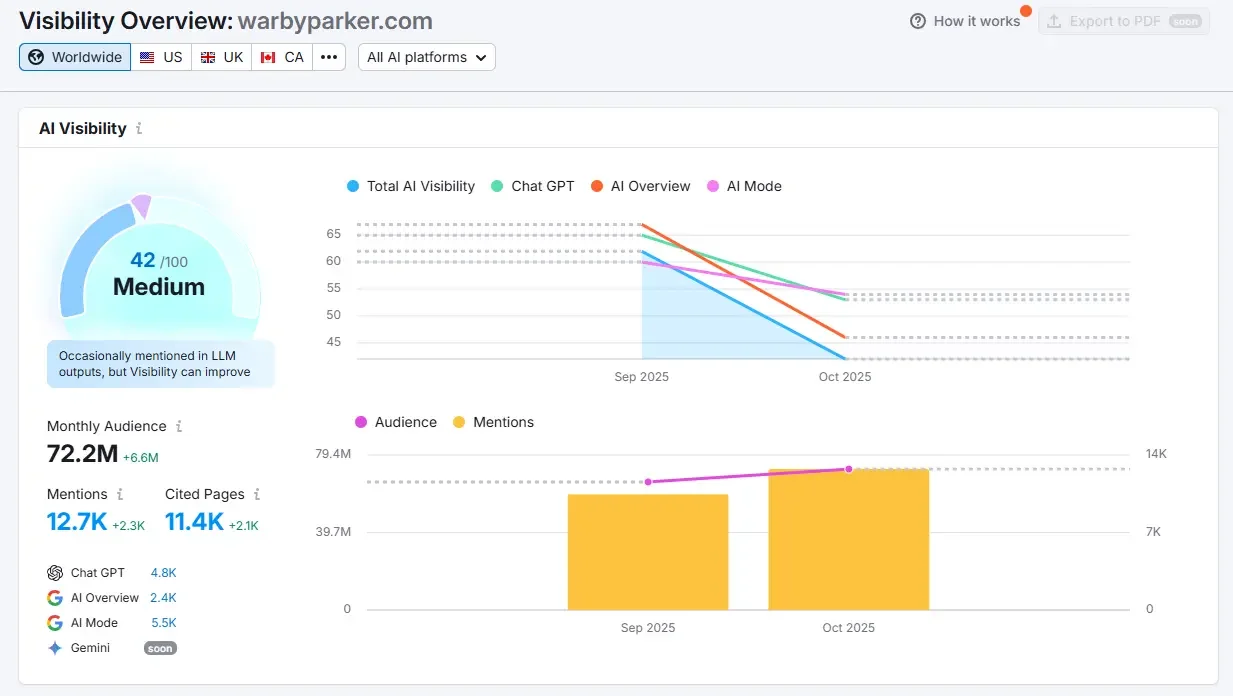
The caveat is that it’s monitoring, not optimization. Semrush can tell you that you’re not being cited by ChatGPT for your target queries. Although it offers workflows to help fix that, they’re extras and aren’t dedicated solutions.
At the end of the day, you still need to know what structural data changes, content formatting decisions, and entity-building strategies will actually move the needle, and that’s a separate skillset.
What Makes Semrush Worth Considering
Semrush has many strengths that justify its reputation, there’s no denying that.
The data is industry-leading: The keyword database, backlink index, and competitor intelligence tools are among the best available. No other tool combines traditional SEO data and AI visibility monitoring in one dashboard the way Semrush One does.
The AI visibility toolkit is ahead of the curve: Tracking brand mentions and citations across ChatGPT, Google AI Overviews, and Gemini simultaneously, with sentiment analysis and share of voice, is advanced.
Competitor intelligence is outstanding: Seeing exactly which keywords drive your competitors' traffic, where their backlinks come from, and which pages perform best is useful for any business trying to understand their market.
Keyword Gap is a ready-made content roadmap: For businesses that do have someone to carry out on content, the Keyword Gap tool tells them exactly what to write. The opportunities are served up directly.
The audit prioritization helps: Rather than overwhelming you with every technical issue at once, Semrush ranks them by impact. Even if you don't know what half the terms mean, the priority order tells you where to start.
Active development: Semrush ships new features regularly. It's not a stagnant tool.
Why Semrush Is Too Much for Small Businesses
Despite its great set of features, Semrush might not be the right solution for your SEO efforts as a small business owner. Here’s why.
Steep Learning Curve
Semrush has a 55+ tool sidebar. The AI visibility toolkit added dozens more reports to an already dense interface. G2 reviewers mention the learning curve in 800+ separate reviews. It's a defining characteristic of the platform.
If you’re a small business owner who's also running operations, handling customers, and managing staff, spending weeks learning an SEO tool isn't realistic. Most users end up using 10% of what Semrush offers and paying for 100% of it.
Limited Execution
This is the most important limitation for small businesses. Semrush tells you your site has 14 technical issues. It doesn't fix them. It tells you there's a keyword opportunity with 1,300 monthly searches. It doesn't write the content without a separate subscription. It shows you that a competitor has 400 backlinks you don't. It doesn't help you build them either.
Every insight requires a follow-up action that Semrush doesn't take. For a business with an in-house SEO team or an agency relationship, that's fine; the data feeds into the execution workflow.
For a solo founder or a small team, you’ll likely stall.
Limited Starter Plan
At $139.95/mo, the starter (SEO) plan looks manageable. But it excludes JavaScript rendering in the Site Audit, which means if your site uses modern frameworks, it might give you a false clean bill of health.
It also limits you to 500 keyword tracking positions, basic keyword research and competitor analysis, and offers no AI search visibility tracking. For any business doing serious SEO work, you'll need Pro+ at $299/mo. fairly quickly.
Billing Complaints
Semrush's G2 score is 4.5/5. Its Trustpilot score is 1.8/5 across 1,300+ reviews. The gap is largely explained by billing and customer support complaints: unexpected charges, difficulty cancelling subscriptions, unresponsive support when trying to end a plan, and most importantly, the high subscription costs and add-on fatigue users face.
This doesn't affect the tool's functionality, but it's worth knowing before you enter your credit card.
Add-On Fatigue
The base tool is powerful, but costs stack up. There’s always something else you have to pay for on-top of the base subscription: additional users, reports, lead generation, content writing, additional tracking, and much more.
Users consistently report "add-on fatigue" as costs compound beyond the headline price. Realistically, most of them end up spending $400+/mo. after getting all the add-ons they need.
📌 Semrush isn’t bad. It’s an exceptional tool in the wrong hands. A business with an SEO manager or agency relationship gets enormous value from it. However, a business owner trying to rank their website while running everything else will likely find it overwhelming, underuse it, and overpay for it.
How Much Does Semrush Cost?
Semrush recently consolidated its SEO and AI search visibility features into a three-tier subscription, as traditional SEO is not divorced from GEO. This also means that there’s less flexibility in terms of pricing.
Plan | Price | Features | Best for |
|---|---|---|---|
SEO | $139.95/mo. | Includes 5 websites to monitor, 500 keywords to track daily, basic keyword research, competitor analysis, position tracking, and standard Site Audit. No GEO features. | For beginners and individual projects. |
Pro+ | $299/mo. | Includes 15 websites to monitor, 1,500 keywords to track daily, keyword cannibalization analysis, historical SEO data, multi-location/device tracking, and MCP access. 100 prompts to track daily, 1 domain for AI brand performance, 300 AI visibility reports per day, and an AI-ready Site Audit. | For growing brands looking to scale SEO and AI search impact. |
Advanced | $549/mo. | Includes all Pro+ features, plus: 40 websites to monitor, 5,000 keywords to track daily, SEO share of voice, and API data integration. 200 prompts to track daily. | For those who need maximum power, including API access, insights, and automation. |
❌ The SEO plan at $139.95/mo. excludes JavaScript rendering in the Site Audit and AI visibility features. Most modern websites use JavaScript frameworks. Without JS rendering, the crawler can't see technical issues hidden behind scripts, meaning your site health score may be artificially clean. For accurate audits, start at Pro+ ($299/mo.).
Who Should Use Semrush?
Semrush is the right tool in specific situations, but we can’t recommend it for everyone. Here are our honest thoughts as experienced users.
Semrush makes sense if... | Semrush probably isn't the right fit if... |
|---|---|
✅ You have a dedicated SEO manager or in-house team | ❌ You're a solo founder handling SEO yourself alongside everything else |
✅ You work with an SEO agency that needs data to inform strategy | ❌ You want your SEO executed, not just analyzed |
✅ You manage multiple client sites or projects simultaneously | ❌ You have one website and want it to rank without a learning curve |
✅ You need deep competitor intelligence at scale | ❌ You're looking for a tool solves your SEO problems, not just list them for you |
✅ AI visibility monitoring is a priority and you have a team to act on the insights | ❌ Your budget is $139.35/mo. and you can't realistically move to Pro+ for accurate audits |
✅ You already understand SEO and need better data | ❌ You're new to SEO and need execution support, not just measurement |
Or, remember the following:
For SEO professionals and agencies: Semrush is excellent. The data depth, AI visibility monitoring, and competitor intelligence are best-in-class. If you have the team to act on the insights, the investment is justified.
For small business owners: Semrush is likely overkill. You’ll pay $139.95/mo. to $299/mo. for a platform you’ll use 10% of, with insights you won’t have time to act on. The tool measures your SEO situation, but it does little to help you improve it. If you need execution rather than analysis, look at tools built for that.
If Semrush Feels Overkill, Try Zaturn’s Alex
If you’re running a small business, you likely already know that you should be ranking for your main keywords and that you should be publishing SEO content. However, you probably don’t have the time (or the expertise) to act on it consistently.
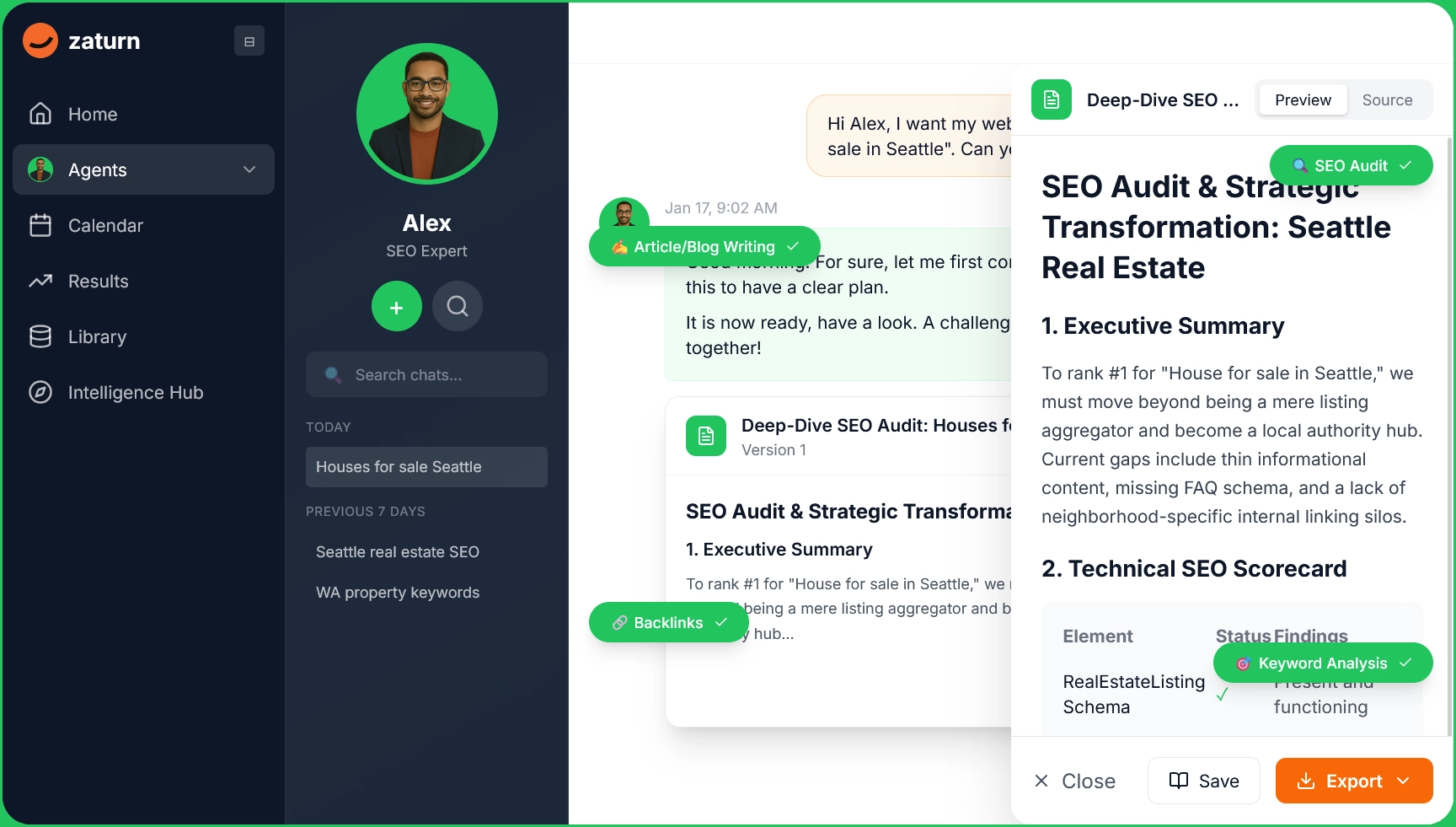
Alex is Zaturn’s AI SEO agent. The difference is what happens after the analysis.
Semrush | Alex (Zaturn) | |
|---|---|---|
What it does | ⚠️ Measures, monitors, and surfaces SEO data | ✅ Audits, fixes, writes content, and tracks rankings |
Who executes | ⚠️ You or your SEO team | ✅ Alex — you review and approve |
Learning curve | ❌ Very steep | ✅ None — conversational interface |
Site audit | ⚠️ Detailed data, you implement fixes | ✅ Identifies issues and implements fixes after approval |
Content creation | ❌ Add-on | ✅ Writes SEO-optimized blog posts in your brand voice |
Keyword research | ⚠️ Deep database, you build the strategy | ✅ Alex identifies opportunities and acts on them |
Rank tracking | ✅ Yes — daily tracking across positions | ✅ Yes — via Google Search Console connection |
Starting price | ❌ $139.95/mo. (SEO) | ✅ $69/mo. (includes all 6 Zaturn agents) |
Best for | SEO teams and agencies with data needs | Small business owners who need SEO done, not analyzed |
The workflow with Alex looks like this:
You tell him what you want to rank for.
He runs a deep audit of your actual website, identifies the gaps, writes the blog posts, optimizes the meta tags, and tracks how things move over time, all through a conversational interface.
You approve before anything goes live.
There’s no dashboard to learn, no data to interpret, and no follow-up actions that pile up. You talk to Alex like you would a real person and he takes care of the rest.
Semrush tells you what’s broken. Alex fixes it. Try Alex for free for 14 days; no credit card is required.