AI Marketing for Small Businesses: Do More With Less in 2026
Learn how small businesses are using AI for social media, email, SEO, and ads in 2026 and why. Practical guide with tools, costs, and step-by-step workflows. GDPR compliant.
Most small business owners know they should be doing more marketing, but most aren’t because they’re already stretched thin running operations, serving customers, and managing everything else that comes with running a business.
The standard advice is to either hire someone or use a tool. Neither answer is satisfying when you’re looking at $3,000/month agency retainers on one end and a list of 22 AI tools in the other.
This guide covers what AI marketing for small businesses actually looks like in practice, which channels deliver the clearest results, what it costs, and how to set it up.
Short Answer
AI marketing for small businesses means using AI tools to handle the repetitive, time-consuming parts of marketing (writing social posts, sending emails, researching keywords, and building ad copy) so you can focus on running your business.
You don't need 22 tools. Most small businesses get the best results from 3 to 5, organized around their highest-impact channels. The key is starting with one channel, getting it working, and building from there.
What Is AI Marketing for Small Businesses?
AI marketing for small businesses means using AI tools to plan, create, and distribute marketing content across channels like social media, email, SEO, and paid advertising, without needing a full marketing team to do it.
For most small businesses, that means using AI to:
Write first drafts of social posts.
Suggest email subject lines.
Identify the keywords their customers are searching for.
Generate ad copy.
→ The AI produces the work; you review and approve it. The human judgment stays in the loop, not just in the weeds of production.
This is different from enterprise marketing automation, which typically requires technical setup, dedicated staff, and a significant budget. Small business AI marketing is designed to be lean: the best platforms take 30 minutes to configure and produce usable content the same day.
Why Are Small Businesses Turning to AI Marketing Now?
The numbers tell the story. Small businesses have been adopting AI marketing at a pace that would’ve been hard to predict two years ago, and the businesses getting there first are seeing a measurable competitive advantage.
58% of small businesses now use generative AI, according to the U.S. Chamber of Commerce.
AI adoption among small businesses surged 41% year-over-year in 2025, according to a survey from Thryv.
90% of SMBs using AI report that it boosts their revenue and overall efficiency, according to Salesforce’s SMB Trends Report.
71% of small business marketers say AI helps them compete with larger brands, per ActiveCampaign.
Marketers using AI save an average of 13 hours each week and $4,379 per month in cost savings, according to ActiveCampaign.
These SMBs aren’t following trends; the adoption spike is happening because the cost and time math finally works for them.
→ A full-time marketing hire costs $40,000 to $60,000 per year before benefits.
→ A digital marketing agency retainer runs $1,500 to $5,000 per month.
→ A part-time freelancer adds $2,000 to $6,000 per month for limited coverage.
AI doesn’t replace the strategic thinking those options provide at their best. But for the majority of small businesses that need consistent content, regular email sends, and basic SEO coverage, it delivers most of the execution at a fraction of the cost.
📊 Insight: According to UpFlip, 66% of small business owners spend less than $1,000 on marketing annually. AI tools make serious marketing possible at that budget level for the first time.
What Can AI Do for Your Marketing as a Small Business?
AI works best in channels where the main task is content production: creating, formatting, scheduling, and optimizing. Here are the four channels where small businesses consistently see the clearest returns.
Social Media
Social media is the channel most small businesses try first and give up on fastest because keeping up with it manually is genuinely unsustainable. Writing posts, sourcing images, researching hashtags, and scheduling across multiple platforms adds up to hours every week.
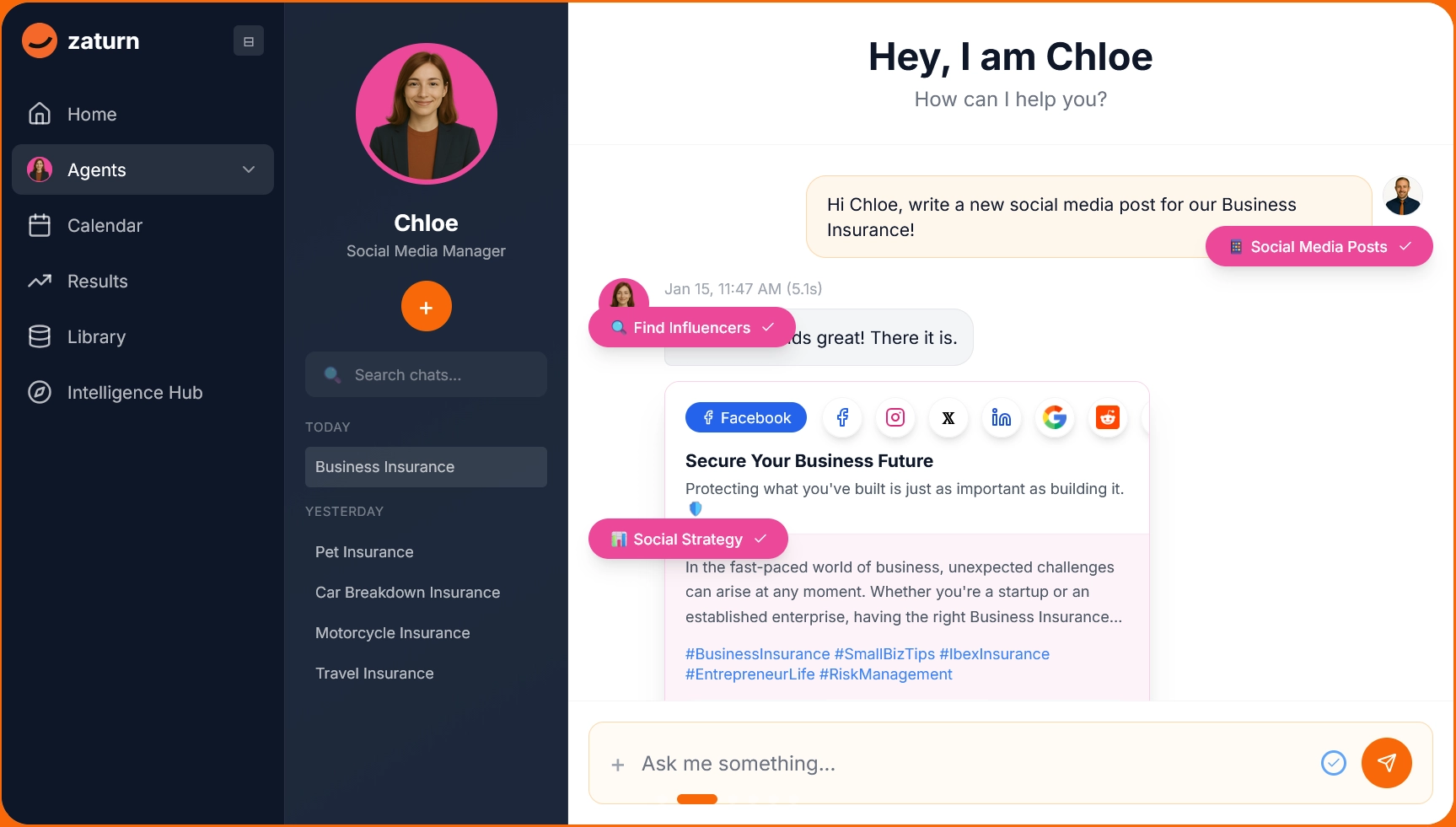
AI handles the production layer by
Generating captions tailored to each platform
Creating on-brand visuals
Researching hashtags based on current engagement patterns
Scheduling posts directly to your accounts
Tracking content performance and adjusting based on what works
You approve what goes live while the content keeps flowing, whether or not you have time to think about it that week.
✅ When you use AI for social media, expect consistent posting across multiple platforms and saving 8 to 12 hours per week on content production.
Email Marketing
Email is the highest-ROI channel in marketing, full stop. 35% of companies report it delivers a return of $10 to $36 for every $1 spent, and this number has held steady across multiple years of industry research.
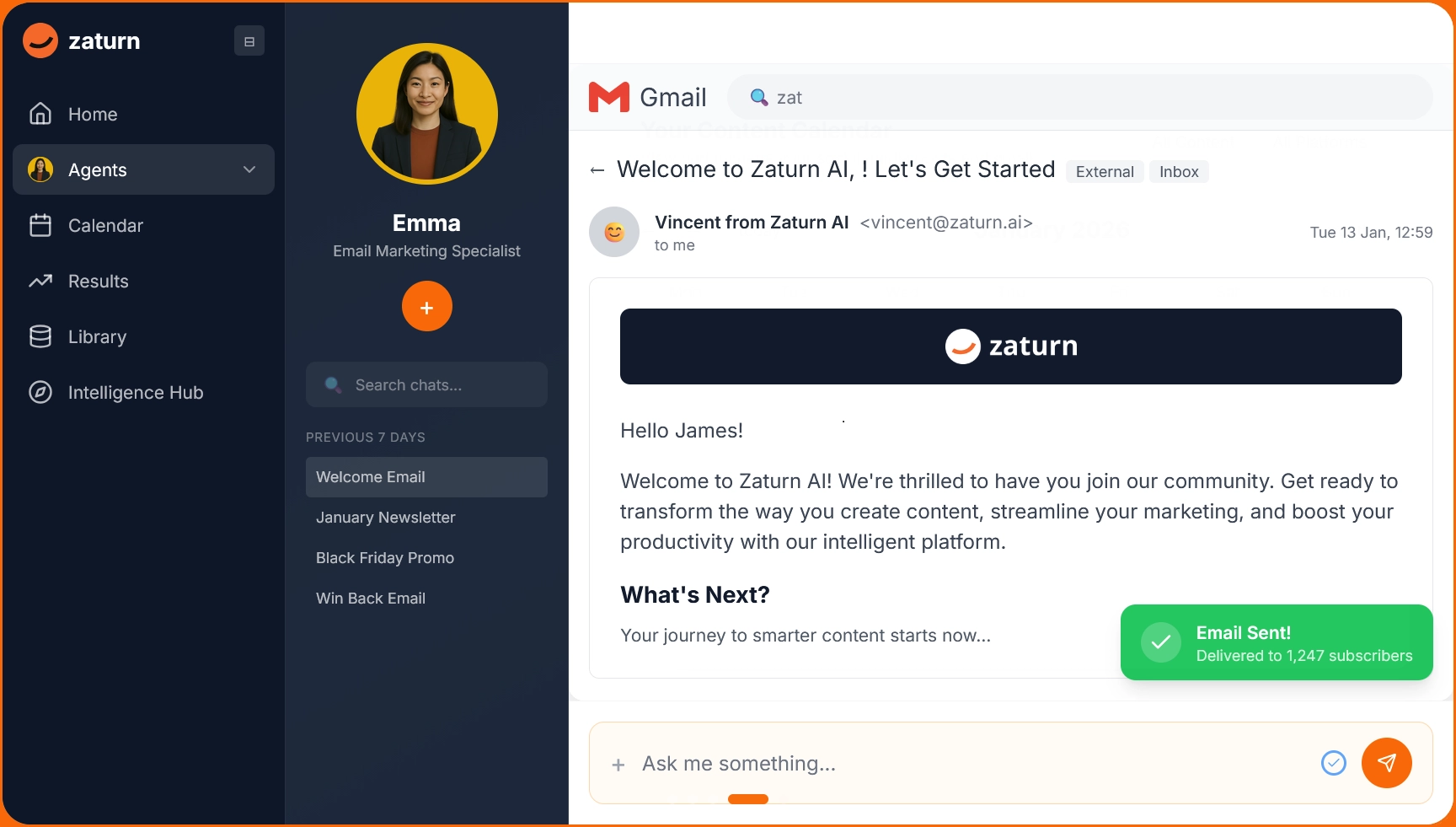
Most small businesses either send emails sporadically or not at all because building a campaign from scratch takes 3 to 4 hours that most owners don’t have.
An AI email tool handles the following:
Subject line writing
Body copy in your brand voice
Audience segmentation
Automation sequences (welcome series for new subscribers, re-engagement campaigns for inactive ones, and post-purchase follow-ups).
Once configured, these sequences run automatically. Every new subscriber gets the same polished welcome series without you touching anything.
✅ When you use AI for email marketing, you’ll have a complete email operation running on autopilot, with open rates that improve over time as AI optimizes lines and send timing.
SEO
75% of users never click past the first page of search results. If your business isn’t appearing for the searches your customers are running, you’re effectively invisible online. SEO is how that changes, and it’s also one of the most time-intensive marketing channels to manage without help.
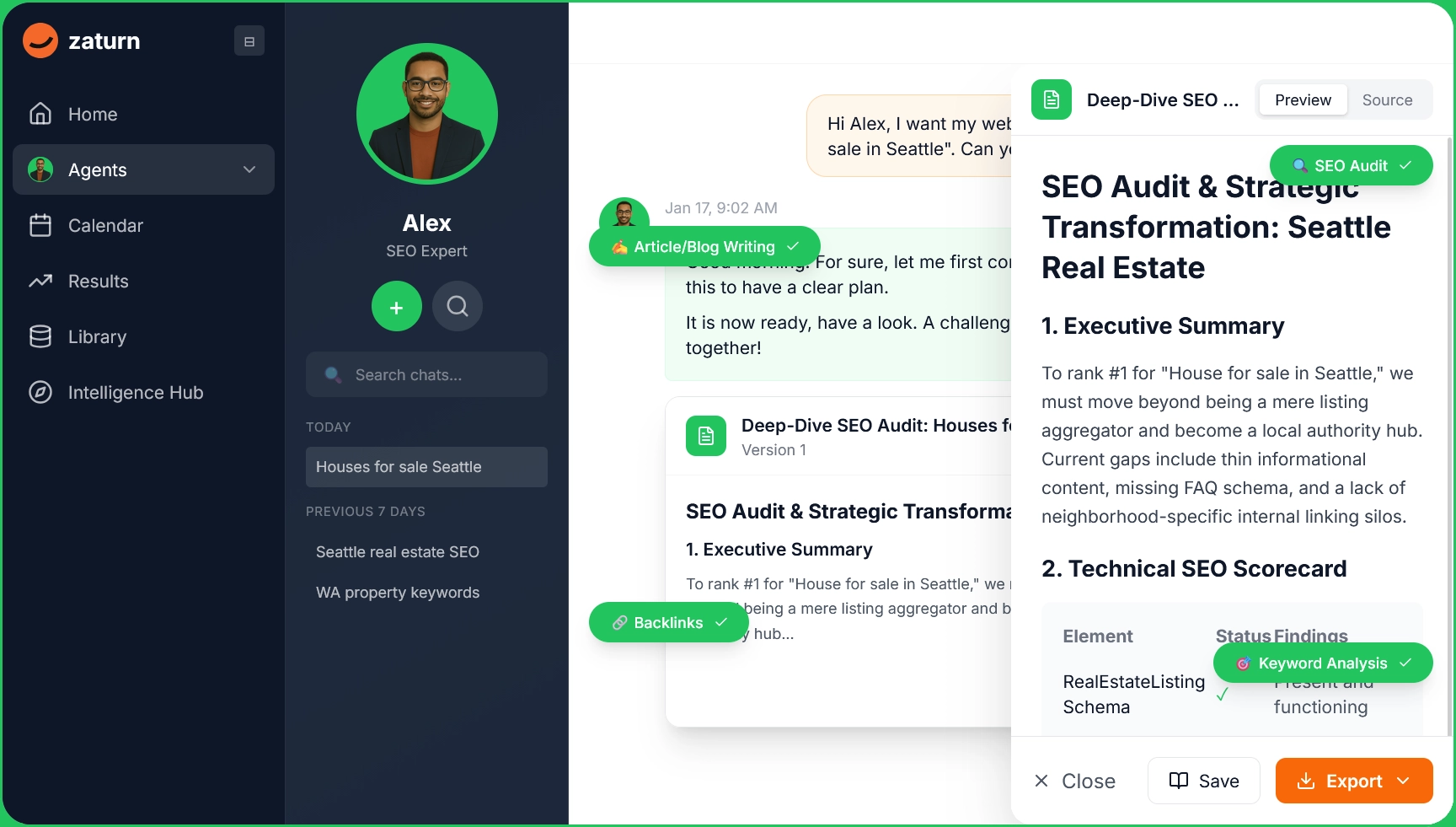
AI SEO tools research keywords based on what your customers actually search for, write optimized blog content and landing pages, manage meta descriptions and title tags, and monitor your rankings over time. Some also have GEO features (Generative Engine Optimization) to increase your AI search visibility.
For local businesses, AI handles the hyperlocal keyword research that drives foot traffic and appointment bookings. For e-commerce, it covers product page optimization and content that captures buyers earlier in their decision process.
✅ AI will help you secure a steady flow of SEO-optimized content that compounds over time. Local businesses typically see measurable ranking improvements within 60 to 90 days.
Paid Advertising
Meta Ads and Google Ads remain the two most scalable paid channels for small businesses. They’re also the easiest to lose money on without the right setup.
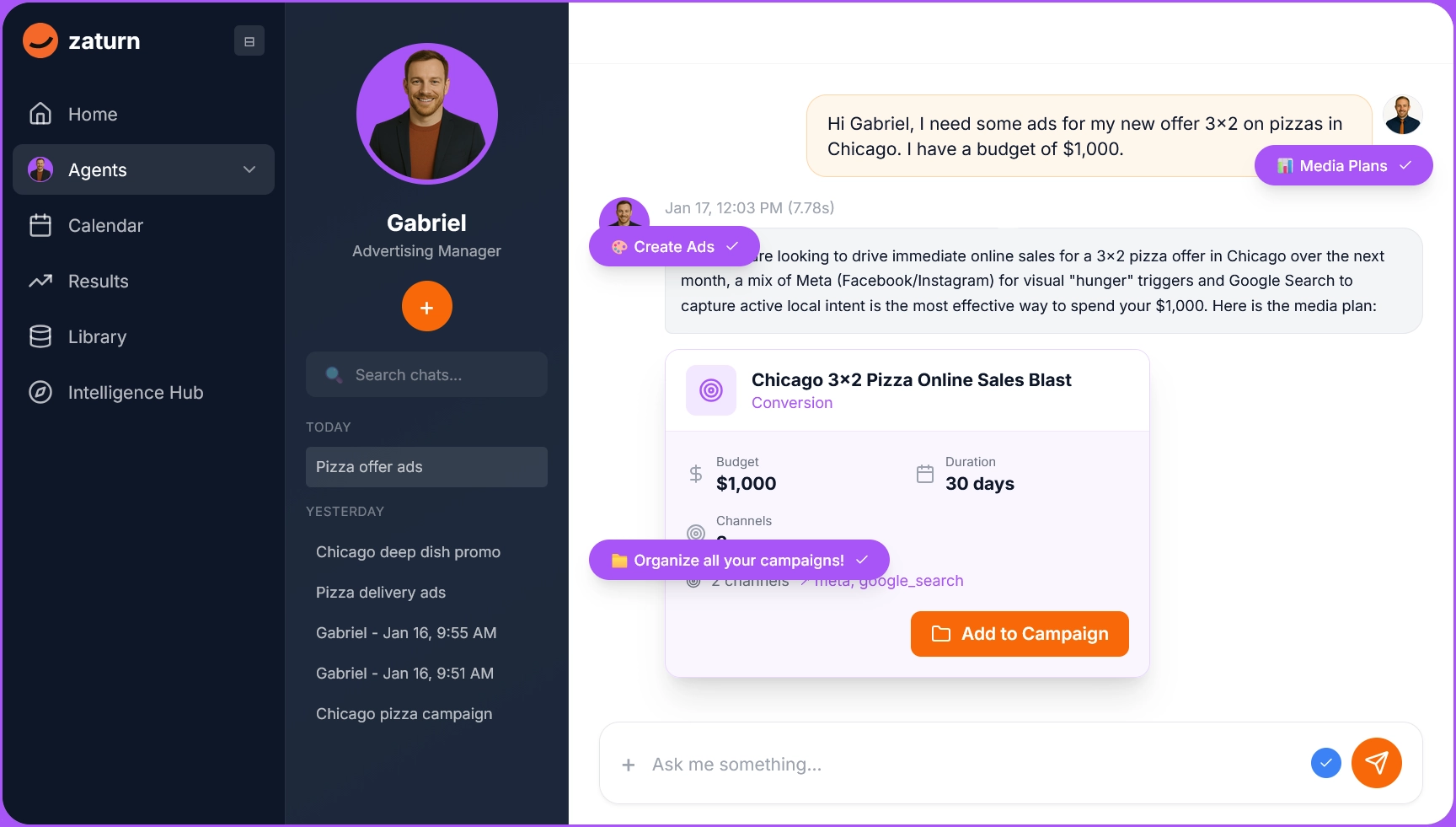
Poor targeting, weak copy, or misallocated budget between platforms are the three most common ways small businesses burn through ad spend without results.
AI advertising tools can help in the following ways:
Building media plans
Writing ad copy variations
Suggesting audience targeting parameters
Helping allocate budget across platforms based on your objective
They don’t replace the need for judgment about what to spend, but they compress the time between idea and launch from weeks to hours, and they reduce the trial-and-error that makes early ad spend expensive.
✅ Using AI for paid advertising will net you better-performing campaigns with less wasted spend in the first month compared to building campaigns manually without advertising expertise.
How Much Does AI Marketing Cost?
This is the question most resources skip; they list tools with individual prices but never show what a complete monthly stack looks like at different budget levels. Here’s what to expect.
Tier | Monthly Budget | What You Get | Best For |
|---|---|---|---|
Free | $0 | ChatGPT (free), Canva free, Mailchimp free tier. AI-assisted writing and design, manual scheduling, limited automation. | Testing AI marketing before committing any budget. Solopreneurs with more time than money. |
Starter | ~$50 to $150/mo. | Dedicated tools per channel: a social scheduler with AI (Buffer from $6/mo.), an email platform (Mailchimp from $13/mo.), basic SEO tool. Some automation, still requires significant manual management. | Businesses ready to systematize one or two channels. Good step up from free tier when you have some budget. |
Complete | ~$400 to $700/mo. | An all-in-one AI agent platform covering social, email, SEO, and ads from a single dashboard. Full automation with approval workflows. No juggling separate tools. | Businesses that need consistent marketing across multiple channels without dedicating hours to it each week. |
The Free Tier: Manual with Some AI Assistance
A $0 stack is possible and functional. ChatGPT’s free tier writes social captions and email drafts. Canva’s free plan designs graphics. Mailchimp’s free tier sends up to 500 emails per month. You still do the scheduling, decide what to post, and manage each platform separately. The AI is a writing assistant, not an operator.
→ This is the right starting point if you’ve never used AI marketing tools and want to understand what they can and can’t do before spending anything.
The Starter Tier: Tools Per Channel
At $50 to $150 per month, you’re paying for dedicated tools: a proper social media scheduler with AI writing built in, an email platform that handles automation, and perhaps a basic keyword research tool. Each tool does its job well within its channel.
The tradeoff is that you’re managing three to five separate platforms, each with its own login, dashboard, and learning curve. Brand voice is inconsistent across tools because none of them share context.
→ This tier makes sense if you have one channel that clearly drives the most results for your business and you want to go deep on that channel specifically.
The Complete Tier: One Platform for All Channels
At $400 to $700 per month, you're looking at all-in-one AI agent platforms that cover every marketing channel from a single dashboard.
Your brand voice, visual assets, audience details, and campaign history live in one place. Every agent draws from the same context, so your social posts, emails, SEO content, and ad copy all sound like the same brand.
Zaturn sits in this tier, starting at $69/mo. Six AI agents cover social media, advertising, SEO, email, website optimization, and general coordination. Every piece of content goes through an approval queue before publishing. Nothing goes live without your sign-off.
📊 Here’s the math: at $50 for a business owner’s time, spending 12 hours per week on marketing is $2,400/mo. in opportunity cost. A complete AI marketing platform at $69/mo. recovers the majority of that time for less than most people spend on coffee.
What AI Marketing Cannot Do for Your Small Business
Every resource about AI marketing lists the benefits. Fewer are honest about where it breaks down.
Here's what AI genuinely can’t handle and what that means for your business.
Brand strategy: AI executes on a strategy you define. It can’t define one from scratch. Deciding which channels matter for your specific business, which customer segments to prioritize, and how to position against competitors requires human judgment informed by real market knowledge.
Crisis communication: When something goes wrong publicly (a bad review goes viral, a product has an issue, or a customer complaint escalates), the response needs a human who understands context, tone, and the specific relationship at stake. AI-generated crisis responses are frequently the wrong move.
Relationship-based sales: In industries where deals close through personal relationships (professional services, B2B, or high-ticket retail), AI can support the marketing that creates visibility, but the conversion happens human to human.
Local community presence: Sponsoring the little league team, showing up at the chamber of commerce event, and building relationships with neighboring businesses. This is marketing that no AI tool touches.
Authentic voice calibration: AI learns your brand voice over time, but the initial calibration requires real input from you. Generic briefs produce generic output. The more specific you are about tone, vocabulary, and what you want to avoid, the better the output gets.
AI is exceptional at execution, but it's poor at origination. Strategy, relationships, and context still need a human. Repetitive production tasks, like writing the fifth version of a similar post, scheduling the weekly newsletter, or generating ad copy variations, are exactly what AI does best.
Is Human Strategy with AI Execution a Valid Option for Small Businesses?
For businesses that have outgrown full DIY but can’t justify a full-service agency, a hybrid model works well.
→ AI tools handle daily execution (content creation, scheduling, email sends, and basic SEO).
→ A fractional marketing consultant works with you monthly or quarterly on strategy, campaign planning, and performance review.
This typically runs $1,500 to $3,000 per month in total. It’s significantly less than a full agency retainer, with better strategic input than pure DIY.
How to Set Up AI Marketing for Your Small Business
The worst thing you can do is try to set up every channel at once. The best approach is phased: start with one channel, get it working, then add the next.
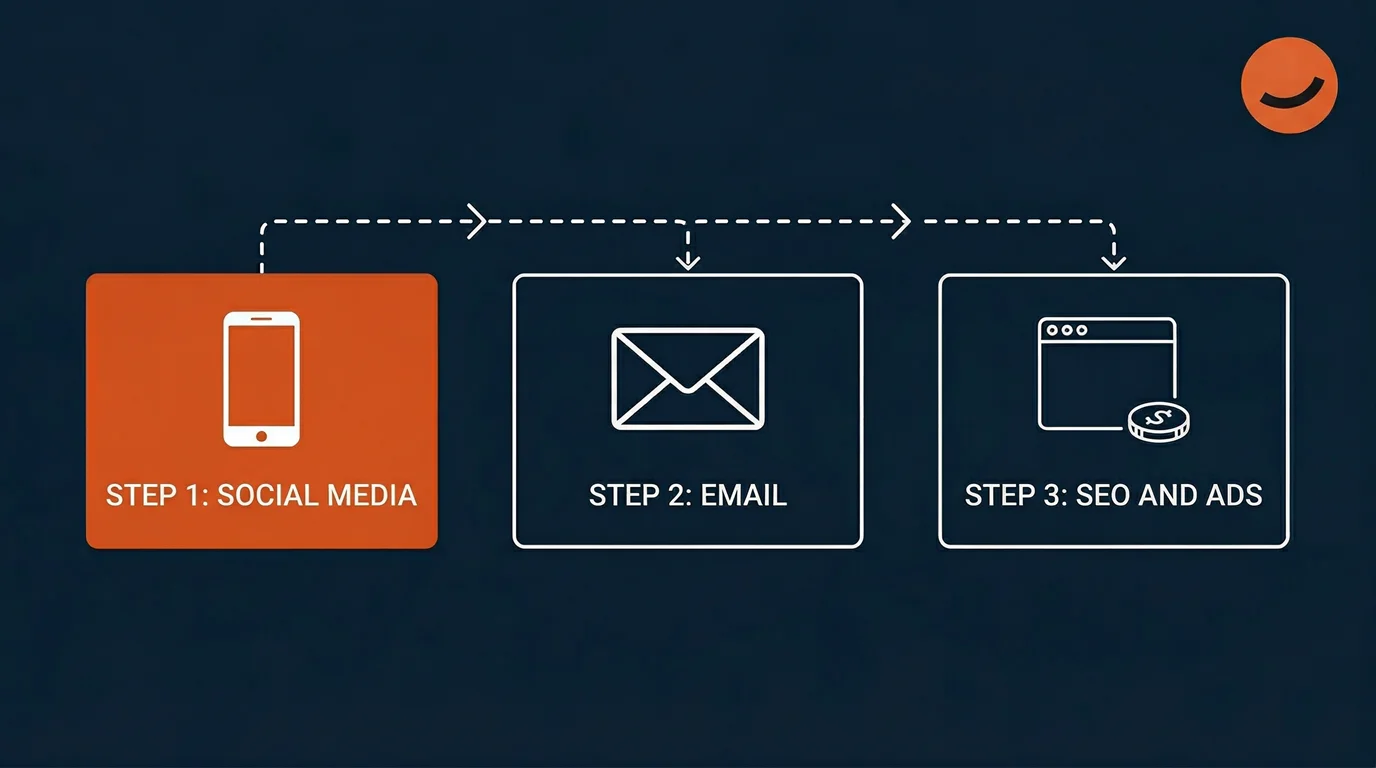
Here’s a practical three-month roadmap.
Month 1: Start With Social Media
Social media is the fastest channel to see results from AI because the output is immediate and visible. Start here.
Choose your platform and connect your accounts. For most businesses, Facebook, Instagram, and LinkedIn cover the majority of your audience. Connect them to your AI marketing platform.
Build your brand profile. Input your business name, logo, colors, tone of voice, target audience, and key products or services. This is what the AI draws from when generating every post. Spend 20 to 30 minutes here; the more specific you are, the better the output.
Review your first content calendar. Most AI platforms generate a month of content suggestions after setup. Review each post, make edits where needed, and approve what you're happy with. For the first batch, expect to edit 20 to 30% of posts. After a few weeks of feedback, that typically drops to 5 to 10%.
Set your posting schedule. Aim for 3 to 5 posts per week to start. Consistency matters more than frequency; two posts a week every week outperforms five posts one week and nothing the next.
Month 2: Add Email
With social running consistently, email is the natural second channel. The ROI is the best of any digital channel, and the effort is front-loaded.
Build your welcome sequence first. A 3-to-5 email welcome series for new subscribers is the single highest-impact email automation because it runs automatically for every new person who joins your list. Set it up once, and it works permanently.
Send your first newsletter. A monthly newsletter keeps existing customers engaged and drives repeat business. AI handles the copy based on your input: promotions, product updates, and useful content for your audience. You review and send.
Connect your email platform. Most AI marketing platforms integrate directly with Mailchimp, Klaviyo, Brevo, and similar tools. If you're using Zaturn, Emma connects to your existing email platform rather than requiring a switch.
Month 3: Add SEO and Ads
By month three, social and email are running with minimal weekly input. Now you add the channels that drive new customer acquisition.
Publish your first SEO content. Have your AI SEO agent research keywords relevant to your business and location, then create one to two optimized blog posts or landing pages. For local businesses, start with '[service] in [city]' searches. These have high purchase intent and often lower competition than national terms.
Test a small paid campaign. Start with $5 to $10 per day on either Facebook or Google, depending on where your customers spend time. Let your AI advertising tool create the copy and targeting. Run for two weeks, review the data, and adjust. The goal of the first campaign is learning, not immediate ROI.
✅ Pro Tip: The most common mistake small businesses make with AI marketing is giving up before the system calibrates. Most AI marketing tools produce their best output after 4 to 6 weeks of feedback and refinement. The first two weeks are setup; the compounding happens after.
What Results Do Small Businesses Report after Using AI?
The skeptic's question is fair: does AI marketing actually work, or is it a solution in search of a problem?
The latest survey data from 2025 is more consistent than most vendor-produced statistics because it comes from businesses that adopted AI and then reported outcomes.
According to CoSchedule, 83% of marketers using AI report increased productivity.
Research by ActiveCampaign found that 77% of small business marketers say AI gives them more confidence in the quality of their work.
A survey by Reimagine Main Street found that 84% of SMBs are willing to automate marketing content creation.
Litmus reports that email marketing delivers between $10 and $36 for every $1 spent on average.
According to First Page Sage, SEO delivers an average ROI of approximately 748% ($7.48 per $1 spent).
Demand Metric found that content marketing costs 62% less than traditional marketing while generating 3x more leads per dollar.
It’s worth noting that these figures reflect what’s possible when AI tools are used consistently and correctly.
A business that sets up an AI platform and abandons it after two weeks will see no results. The businesses reporting strong ROI are the ones that treated AI marketing as a system to build, not a quick fix to deploy.
How Can Zaturn Help With Marketing for a Small Business?
Zaturn is an AI marketing platform built around six specialized agents, each focused on a specific marketing function.
It sits in the complete tier of the framework above: one platform covering every channel from a single dashboard, with your brand voice and assets stored centrally so every agent produces consistent output.
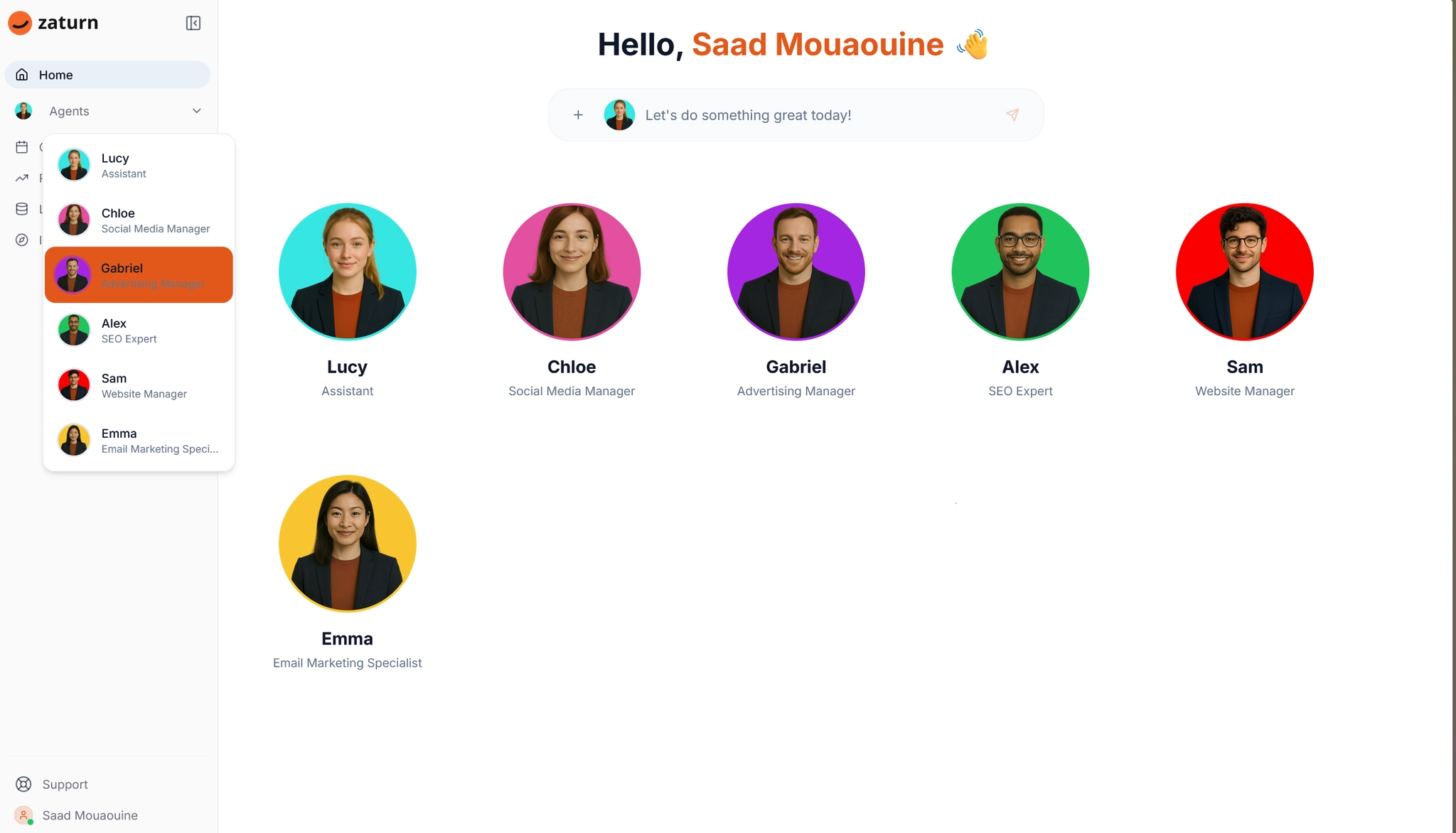
The six agents are the following:
Chloe (Social Media): Plans your content calendar, writes platform-specific posts, generates on-brand visuals, and schedules directly to connected accounts. Covers LinkedIn, Facebook, Instagram, and X.
Gabriel (Advertising): Builds complete media plans, writes ad copy variations, suggests audience targeting, and monitors campaign performance across Google Ads and Meta Ads.
Alex (SEO): Runs technical site audits, researches high-value keywords, writes optimized content, and tracks rankings over time.
Emma (Email): Plans your email strategy, writes campaigns and automation sequences, handles A/B testing, and integrates with Mailchimp, Brevo, Outlook, and Gmail.
Sam (Website/CRO): Analyzes your site section by section for conversion barriers, delivers before/after mockups for recommended changes, and tracks conversion rate improvements.
Lucy (General): Routes requests to the right specialist, answers platform questions, and helps with Intelligence Hub setup so the other agents have the context they need.
Everything runs through an approval queue, and nothing goes live without your green light. The Intelligence Hub stores your brand voice, audience details, visual assets, and integrations in one place, so you don’t need to re-brief each agent every time you need content.
Zaturn’s 14-day free trial requires no credit card. Connect your accounts, build your brand profile, and let its six agents run your day-to-day tasks while you focus on strategy.