Sintra AI Review 2026: Features, Pricing & Why Suggestions Alone Won't Grow Your Business
We tested Sintra AI's 12 helpers, broke down the pricing, and uncovered the execution gap most reviews ignore. If you need AI that actually runs your marketing — not just suggests what to do — this review will help you decide.
Looking for an honest Sintra AI review? We tested the platform, spoke with real users, and compared it against the alternatives. Here's what you need to know before you subscribe.
Quick Verdict: Sintra AI is a solid ideation and content suggestion tool for AI beginners, with excellent onboarding and useful proactive recommendations. However, it falls short on actual marketing execution — you'll still need to manually implement most of what the helpers produce. If you need AI that does the work (not just suggests it), execution-focused alternatives offer better value. Rating: 3.5/5
If you've been researching AI marketing tools in 2026, you've probably come across Sintra AI. With its team of 12 AI "helpers," gamified interface, and bold promise to act as your virtual workforce, Sintra has carved out a recognisable presence in the small business AI space.
But here's the question that matters: does Sintra AI actually do the work — or does it just tell you what you should be doing?
After testing the platform, reviewing what independent analysts and real users are saying, and comparing it against other tools in the category, we've put together this in-depth Sintra AI review. Whether you're a solopreneur weighing your first AI investment or a growing business looking to scale your marketing, this review will help you make a more informed decision.
Already comparing Sintra to specific alternatives? See our detailed Zaturn vs Sintra breakdown.
What Is Sintra AI?
Sintra AI is a business-focused AI platform built around the concept of "AI employees." Rather than offering a single chatbot, Sintra provides 12 specialised helpers — each assigned a name, personality, and area of focus. There's Soshie for social media, Penn for content writing, Seomi for SEO, Cassie for customer support, Milli for sales, and so on.
The platform is powered by a mix of language models including GPT-4.1 and Claude 4 Sonnet, with image generation handled through Gemini 2.5 Flash Image and Flux Kontext. At the centre of the system sits "Brain AI," a knowledge base that stores your brand details, uploaded documents, and website information so the helpers can personalise their outputs.
The full roster of Sintra's 12 helpers includes: Soshie (social media), Penn (blog writing and long-form content), Emmie (email marketing), Seomi (SEO), Cassie (customer support), Milli (sales), Dexter (data analysis), Buddy (business strategy), Vizzy (admin and scheduling), Scouty (recruiting), and additional helpers covering project management and virtual assistant duties.
Sintra was founded in 2023 and is headquartered in Dover, Delaware. The company recently raised $16.7 million in Seed funding from investors including Earlybird Venture Capital, Inovo VC, and Practica Capital — a signal that investors see real potential in the AI employee model. The platform claims over 40,000 users across 100+ countries and currently has around 35 employees. On Trustpilot, Sintra holds a 4-star rating based on nearly 8,000 reviews — though it's worth noting that many reviews focus on the onboarding experience rather than long-term results.
How Sintra AI Works
Getting started is straightforward. During onboarding, Sintra's helpers ask about your business goals, target audience, and website. The interface feels game-like — characters walk you through setup, and by the time you're finished, the helpers are already suggesting tasks.
The daily workflow looks like this:
Log in and review tasks your helpers have suggested
Approve or decline each suggestion
The helper generates the output (a social media post draft, email copy, blog outline, etc.)
You review, tweak, and manually implement the result
Sintra also includes "Power-Ups" — over 90 specialised AI tools for tasks like generating abandoned cart emails, creating images, calculating finances, and more. You can create up to five business profiles and invite team members to collaborate within shared workspaces.
Sintra AI Pricing in 2026
Sintra offers two main plans:
Plan | Price | What's Included |
|---|---|---|
Individual | $39/month | Access to 1 AI helper with related prompt packs and Power-Ups |
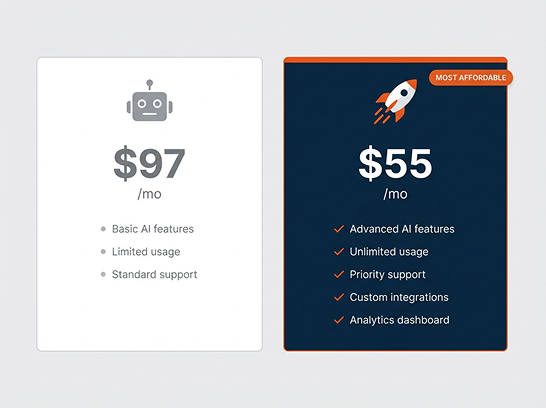
Sintra X | $97/month | All 12 helpers, Brain AI, 90+ Power-Ups, team collaboration |
Both plans include 250 credits per month, with different tasks consuming varying amounts of credits. Background tasks like scheduled publishing don't use credits, but image generation and data analysis do. You can top up credits any time via your billing settings.
There's no traditional free trial, though Sintra does offer a 14-day money-back guarantee. Promotional discounts of up to 60–70% are frequently available — and some reviewers have reported that attempting to cancel triggers a retention offer that extends those discounts indefinitely.
Worth noting: At $97/month for the full suite, Sintra sits at a higher price point than several competitors that offer direct execution capabilities, which we'll cover later.
What Sintra AI Does Well
To be fair, Sintra has genuine strengths worth acknowledging.
The onboarding is excellent. For business owners who have never touched an AI tool, Sintra removes virtually all intimidation. You don't need to know how to write prompts. The gamified approach, while polarising for experienced users, makes the first experience accessible and even enjoyable.
The ideas are genuinely useful. Multiple independent reviews confirm that the suggestions Sintra's helpers generate are smart, relevant, and often quite creative. If a human consultant pitched the same ideas in a strategy session, you'd probably be impressed.
Brain AI adds real personalisation. Unlike generic chatbots, Sintra remembers your brand context across sessions. The more you feed it — your website, brand guidelines, documents, FAQs — the more tailored the outputs become.
Proactive suggestions feel like a real team. Instead of waiting for your instructions, Sintra's helpers surface ideas and reminders daily based on your Brain AI data. For solo business owners who struggle to plan ahead, this nudge-based approach can be genuinely valuable.
Multi-language support is broad. Operating in 100+ languages makes Sintra useful for businesses targeting international markets or managing multilingual content.
Where Sintra AI Falls Short
No tool is perfect, and Sintra has some significant limitations that become more apparent the longer you use it.
The Execution Gap
This is the single most important issue — and the one most review sites gloss over.
Sintra's helpers are good at suggesting what you should do. They'll draft social media posts, outline blog articles, sketch email sequences, and recommend SEO improvements. But when it comes to actually implementing those recommendations — publishing the post, sending the email, launching the ad campaign, updating your website — you're on your own.
One in-depth independent review put it plainly: while the helpers were great at generating ideas and suggestions, the actual execution of the tasks was underwhelming, and the reviewers weren't able to actually use much of the work the helpers produced. Entering the same prompts into ChatGPT consistently yielded better results.
For a busy small business owner, this creates a frustrating loop: you're paying for AI to save you time, but you still need to copy outputs, paste them into other platforms, format everything, and manually execute each campaign. The "AI employee" metaphor breaks down quickly when your employees hand you a document and say "here, go do this yourself."
Helpers Work in Isolation
Each of Sintra's 12 helpers operates independently. Soshie doesn't know what Penn drafted. Seomi can't coordinate with Emmie on an integrated campaign. If you need to move work between helpers, you're manually copying content between chat windows.
For businesses that need cohesive marketing — where your social media, email, ads, and SEO work together as a unified strategy — this fragmented approach creates extra work rather than reducing it.
The Gamified Interface Divides Users
The playful, character-driven design is a deliberate choice, and it works for Sintra's target audience of first-time AI users. But for more experienced business owners, the gamification can feel unserious. One reviewer noted that their CEO dismissed Sintra within five minutes, comparing it to a children's game rather than a business tool.
If you're evaluating AI platforms for a team or pitching one to stakeholders, the aesthetics matter. A tool that looks like a game can be hard to justify as a business investment.
Data Privacy Concerns
Sintra's helpers ask increasingly detailed questions about your business over time — revenue metrics, income sources, operational specifics. While these questions help improve personalisation, several reviewers flagged discomfort with how much sensitive business data the platform collects. As one independent analyst noted, the questions felt too personal for a third-party tool, and the thought of whether it might be a data-harvesting wrapper was enough to give pause.
Credit Limitations
The 250 monthly credits may feel restrictive for active users, particularly those generating images or running data analysis frequently. Unlike some competitors that offer unlimited task execution within their plans, Sintra's credit system means you need to budget your usage carefully.
Integration Gaps
While Sintra connects with Gmail, Google Calendar, Drive, Notion, LinkedIn, and Instagram, the integration ecosystem remains limited compared to more mature platforms. Advanced connections with CRMs, advertising platforms, and project management tools are either missing or clunky, which restricts the platform's ability to fit into complex workflows.
Who Is Sintra AI Best For?
Based on our research, Sintra works best for a specific type of user:
Complete AI beginners who find tools like ChatGPT intimidating and want a guided, structured experience
Very small businesses or side projects where the stakes of marketing execution are lower
Solo operators who mainly need content ideas and basic task management rather than full campaign execution
Users who don't mind manually implementing the suggestions their helpers generate
Sintra is probably not the right fit if you're a growing business that needs your AI to actually execute campaigns, a team that requires integrated cross-channel marketing, or someone who's already comfortable with AI and needs more than idea generation.
Sintra AI vs Zaturn: Suggestions vs Execution
If the execution gap is what concerns you most about Sintra, it's worth looking at how a platform designed specifically to solve that problem compares.
Zaturn takes a fundamentally different approach to AI-powered marketing. Rather than providing 12 helpers that suggest what you could do, Zaturn gives you 5 specialised AI agents that actually do the work — with your approval.
Here's how the two platforms compare on the points that matter most:
Feature | Sintra AI | Zaturn |
|---|---|---|
AI approach | 12 helpers that suggest tasks | 5 agents that execute tasks |
What happens after approval | You get a draft to manually implement | The agent publishes, sends, or launches for you |
Social media | Soshie drafts posts for you to copy/paste | Chloe creates and publishes across platforms including TikTok |
Email marketing | Emmie drafts email copy | Emma builds and sends campaigns through Brevo integration |
Advertising | Buddy suggests ad strategies | Gabriel creates and manages campaigns on Facebook & Google |
SEO | Seomi recommends optimisations | Alex implements on-page changes and content strategy |
Website | No direct website management | Sam manages and updates your site directly |
Agent collaboration | Helpers work independently | Agents work together on integrated campaigns |
Pricing (full access) | $97/month | $55/month (annual) or $69/month (monthly) |
Free trial | 14-day money-back guarantee | 14-day free trial, no credit card required |
Credit system | 250 credits/month, usage-based | No credit limits on core agent tasks |
The core difference is philosophical. Sintra positions itself as a team of consultants who give you advice. Zaturn positions itself as a team of marketing operators who do the work once you give the green light.
For the "stuck in the middle" business owner — someone who can't afford an agency, doesn't have time for DIY marketing, but needs real campaigns running — execution is the differentiator that matters.
A Closer Look at the Execution Difference
Say you want to run a social media campaign promoting a seasonal offer. Here's what the experience looks like on each platform:
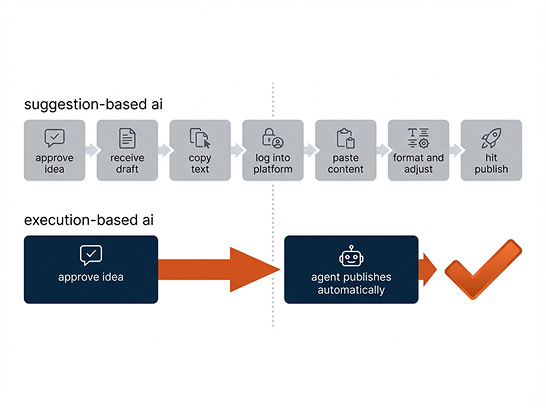
With Sintra: Soshie suggests a content calendar. You approve the ideas. Soshie drafts individual posts. You copy each post, log into each social media platform, paste the copy, add images, schedule publication times, and hit publish. Repeat across channels.
With Zaturn: Chloe proposes a content calendar and draft posts. You review and approve. Chloe publishes the posts directly to your connected social channels on schedule. You move on to the next priority.
Multiply that time savings across email campaigns (Emma), advertising (Gabriel), SEO updates (Alex), and website changes (Sam) — and the operational difference compounds fast.
Other Alternatives Worth Considering
To keep this review balanced, Sintra and Zaturn aren't the only options in this space. Here are some other platforms worth evaluating depending on your needs and technical comfort level:
ChatGPT or Claude (direct AI): If you're comfortable writing your own prompts and managing execution yourself, a general-purpose AI assistant at $20/month covers content generation well. The output quality for raw content is often comparable — some reviewers found ChatGPT produced better results than Sintra when given the same business context. But you lose marketing-specific workflows, direct integrations, campaign automation, and any form of proactive task management. (See our Zaturn vs ChatGPT comparison for a deeper look at this trade-off.)
Lindy AI: A flexible no-code automation platform that supports multi-step workflows across 4,000+ apps. Lindy works across phone, email, and documents, and offers compliance options like SOC 2 and HIPAA. Better suited for technical users who want to build custom AI agents from scratch. Free plan available, with paid plans from $49.99/month.
Jasper AI: Focused primarily on content creation and marketing copy. Strong for teams that need on-brand content at scale, but lacks the multi-function agent approach of platforms like Sintra or Zaturn. Best if content generation is your primary bottleneck.
Traditional marketing agencies: Full-service execution with human expertise, but typically costing £2,000–5,000+/month minimum — well out of reach for most small businesses and solopreneurs. Agencies remain the gold standard for strategy, but the economics simply don't work at smaller scales.
The right tool depends on where you sit. If you need ideas and don't mind doing the implementation work, Sintra or even a general-purpose AI might be enough. If you need end-to-end execution at a price point that makes sense for a small business, the field narrows considerably. For a broader view on how AI agents are reshaping marketing workflows, execution-focused platforms are quickly becoming the standard.
The Bottom Line: Is Sintra AI Worth It in 2026?
Sintra AI delivers on its promise of making AI accessible to non-technical business owners. The onboarding is superb, the ideas are genuinely useful, and the gamified experience removes the barrier to entry that keeps many small business owners from using AI at all. The $16.7M in funding shows institutional confidence, and the 40,000+ user base confirms there's real demand for what Sintra offers.
But here's the honest verdict: Sintra is strongest as an ideation tool, not an execution platform. If you're looking for creative suggestions, business analysis, and content drafts that you'll manually implement, Sintra offers solid value — particularly at discounted rates.
However, if what you actually need is AI that executes your marketing — that publishes your social posts, sends your emails, launches your ads, and updates your website after you approve — Sintra's suggestion-based model creates more work than it eliminates. The helpers don't talk to each other, the gamified interface may not suit serious operators, and at $97/month for the full suite, you're paying a premium for suggestions you still need to act on yourself.
For the small business owner who Googled "sintra ai review" because they're trying to figure out which AI tool will actually move the needle on their marketing: ask yourself whether you need more ideas, or whether you need those ideas turned into action.
If it's execution you're after, Zaturn's 14-day free trial lets you experience the difference for yourself — no credit card required.
Disclosure: This review includes our honest assessment of Sintra AI based on publicly available reviews, user feedback, and platform testing. The comparison section features Zaturn, which is our platform. We've aimed to be fair and factual throughout — we believe the best way to earn your trust is to give you the information you need to make the right choice for your business. For more marketing insights, visit the Zaturn blog.