AI Agent Examples: Case Studies and What Businesses Can Learn
AI agents can handle specific business functions without requiring constant human directions, but how well do they actually perform in real life? We cover real-world case studies and what small businesses can learn from them.
What Is an AI Agent?
An AI agent is an autonomous system that handles specific business functions, such as customer service, marketing, sales, or SEO, without requiring constant human direction.
Unlike tools you prompt occasionally, they operate continuously, take actions on your behalf, and check in when they need input.
The examples below range from enterprise deployments (Klarna or Bank of America) to small business applications, all with documented results.
What Makes an AI Agent Different From a Regular AI Tool?
Understanding the difference between AI agents and AI tools matters because it affects what you can realistically expect.
AI tool (ChatGPT, Midjourney) | AI agent (Zaturn, Klarna’s agents) |
|---|---|
Responds when you prompt it | Operates continuously within a defined scope |
No memory between sessions | Retains context and learns from previous interactions |
Generates output you then use manually | Takes actions directly (posts, sends, optimizes, and reports) |
You manage the workflow | It manages the workflow; you review and approve |
Gartner projects that 40% of enterprise applications will integrate AI agents by the end of 2026, up from less than 5% in 2025. The shift is already underway across most business functions.
AI Agent Examples by Business Function
The examples below are organized by what the agent does, not by industry. Most apply across sectors.
1. Customer Service: Klarna
Klarna | OpenAI-powered customer service agent | Handled 2.3M chats in one month |
In February 2024, Klarna launched an AI customer service agent built with OpenAI. Within the first month, it handled 2.3 million customer conversations, which is equivalent to the work of 700 full-time agents.
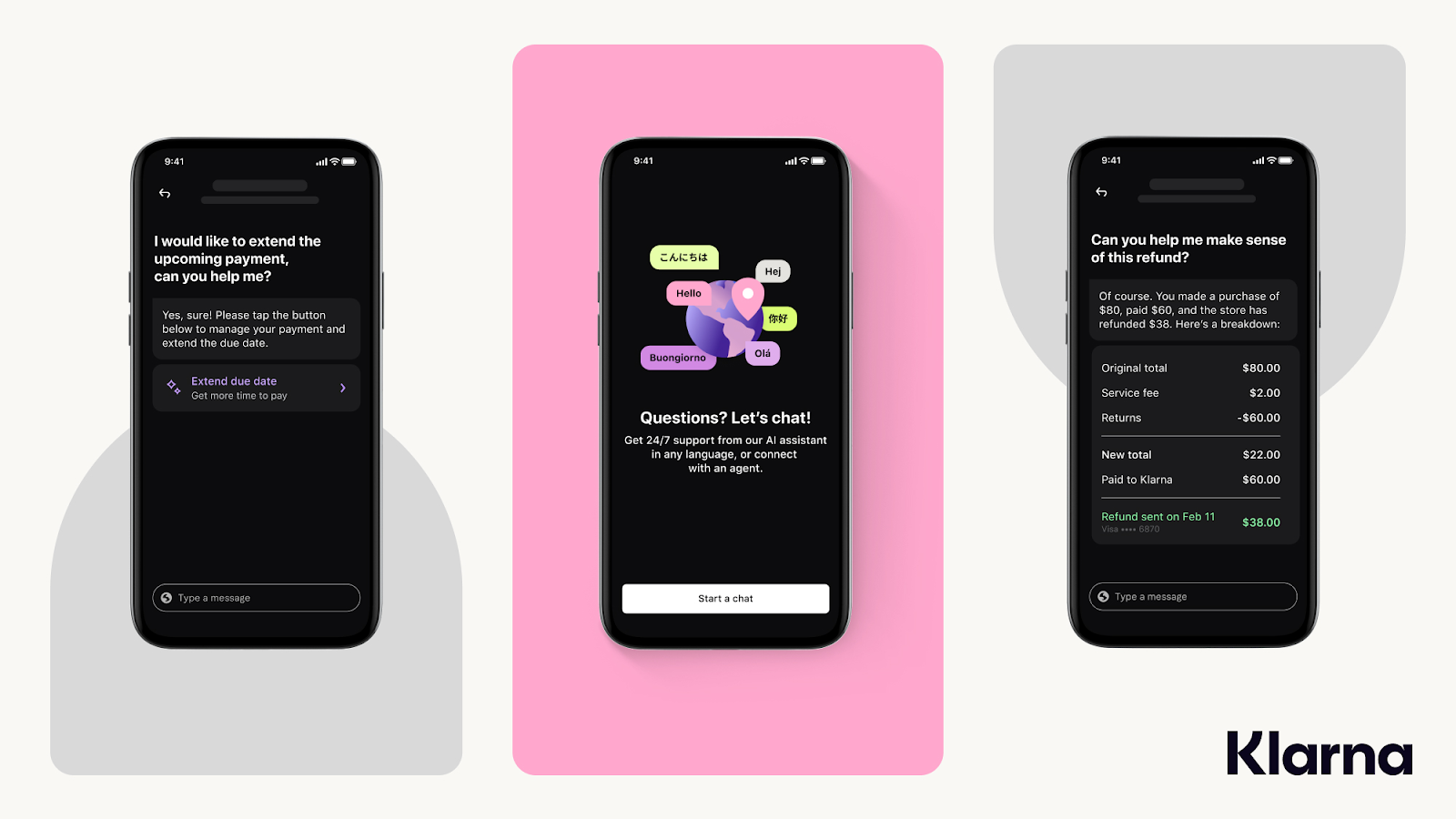
Resolution time dropped from 11 minutes to under 2 minutes, repeat inquiries fell 25%, and customer satisfaction scores stayed on par with human agents.
By Q3 2025, the agent was doing the work of 853 agents and had saved Klarna $60 million. Customer service costs per transaction dropped 40% over two years.
❌ Klarna pulled away from its AI-only approach in 2025 after customers complained about generic answers to complex queries. The company reintroduced human agents for edge cases.
⚠️ AI handles tier-1 support well, but it struggles with cases that require genuine judgment. The hybrid model outperforms both extremes.
❓ For small businesses: Klarna built a custom agent on enterprise infrastructure. A small business equivalent is an AI email marketing agent that handles the routine communication layer, such as welcome sequences, post-purchase follow-ups, and re-engagement campaigns, while you handle the relationship-critical interactions personally. Zaturn's AI email assistant covers this function, writing and sending campaigns in your brand voice with your approval before anything reaches subscribers.
2. Customer Engagement at Scale: Bank of America
Bank of America | Erica (virtual financial assistant) | 3 billion interactions globally |
Bank of America's Erica is one of the most widely deployed AI agents in financial services. In 2025, Erica surpassed 3 billion client interactions globally, averaging tens of millions per month. Erica helps customers check balances, review transactions, get financial insights, and navigate the app without waiting for a human representative.
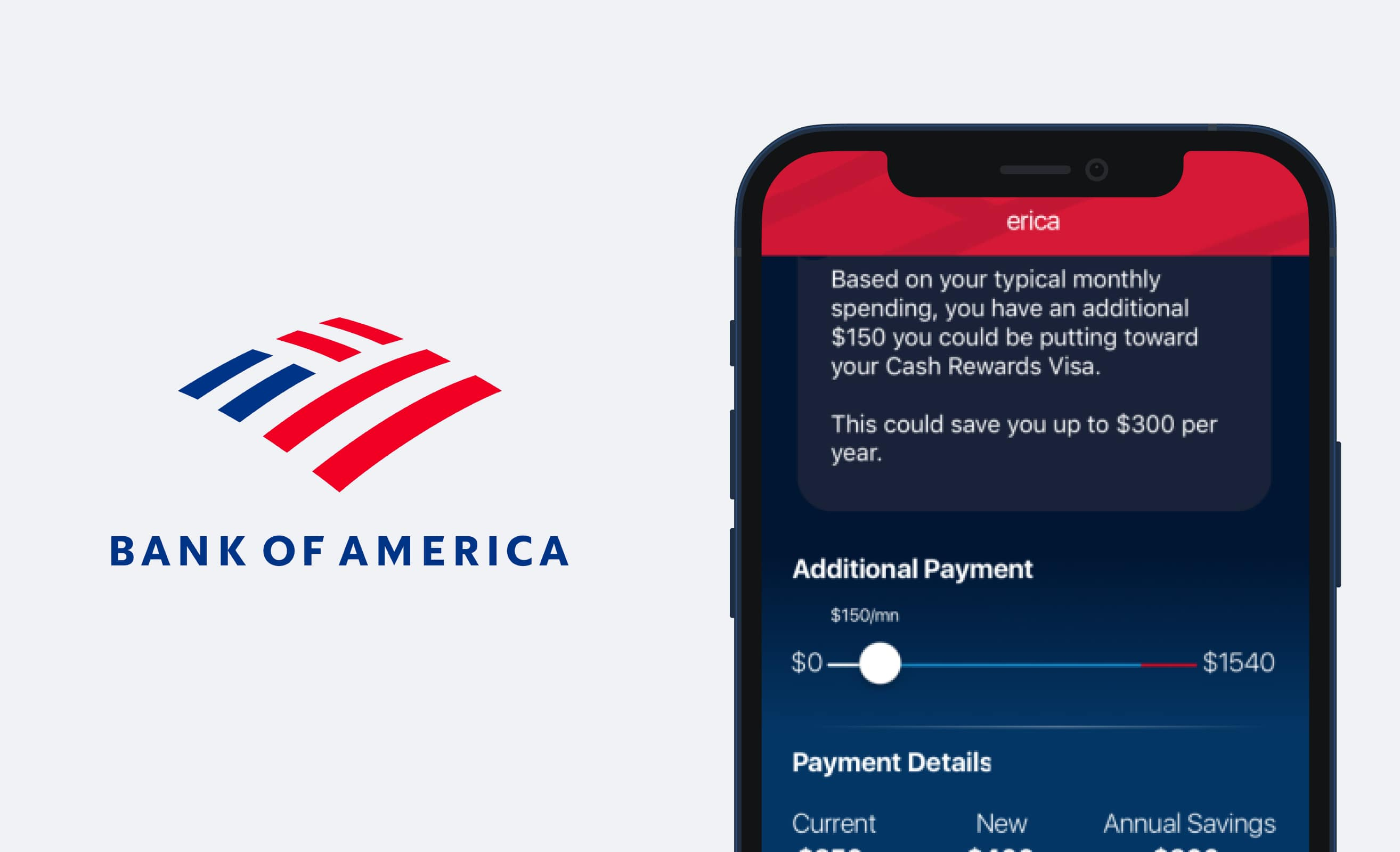
The result is meaningful: call volumes reduced, customer satisfaction improved, and the bank serves a larger customer base without proportionally scaling support headcount.
❓ For small businesses: The principle scales down cleanly. An AI agent that handles routine customer-facing communication, such as answering product questions via email sequences, following up after purchases, and re-engaging inactive customers, frees you for the conversations that actually require your presence. Emma, the AI email assistant, handles this via email.
3. SEO and Content: Adore Me
Adore Me | AI content agents (Writer platform) | 40% increase in non-branded SEO traffic |
Adore Me, a direct-to-consumer lingerie brand, deployed a network of specialized AI agents to handle product descriptions, SEO optimization, and translation. A product description agent followed SEO requirements and brand voice, a translation agent preserved tone across languages, and a stylist note agent generated formatted drafts for review.
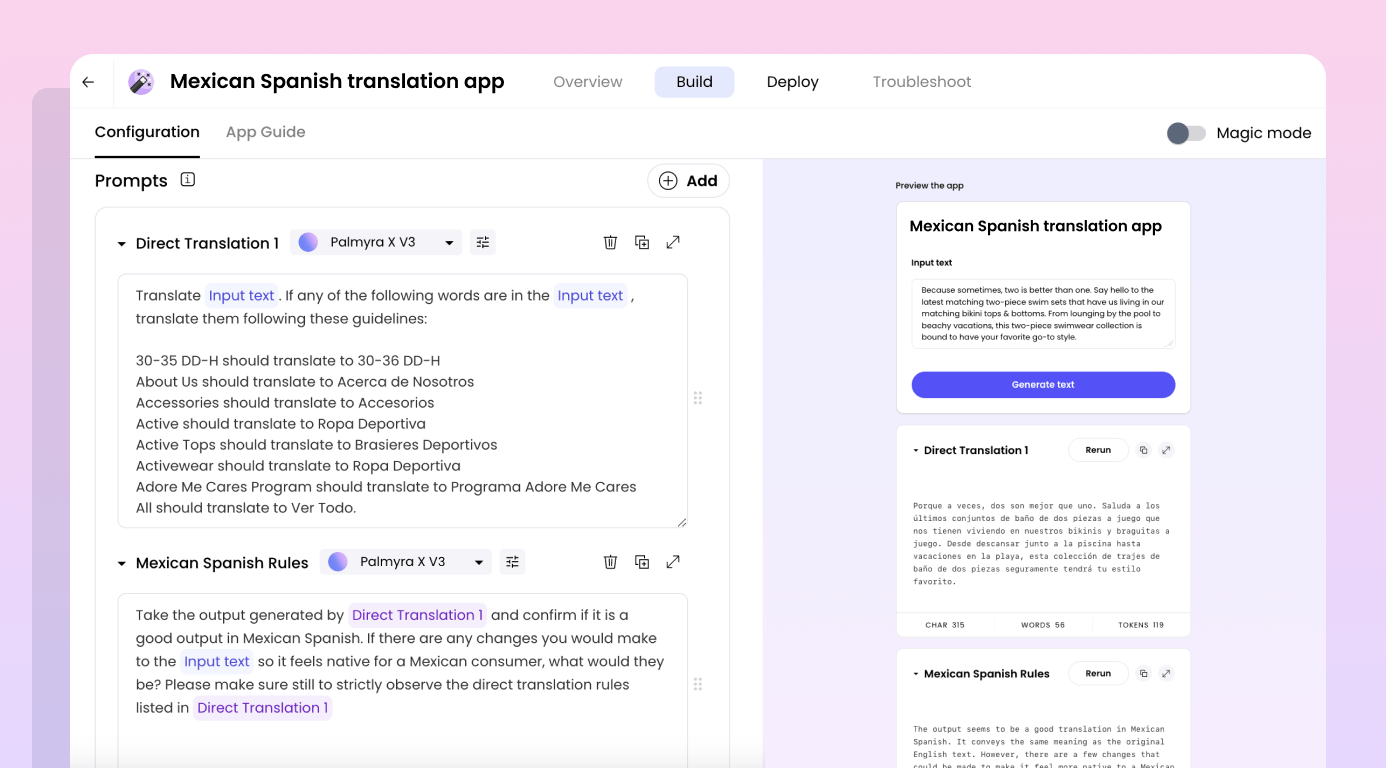
Non-branded SEO traffic increased 40%, and localized content that previously took months to produce was completed in 10 days. The agents didn't replace the content team. Rather, they handled the high-volume production work, freeing them for strategy and quality control.
❓ For small businesses: Adore Me had an enterprise content team to orchestrate the agents. Zaturn's SEO assistant, Alex, does the equivalent for businesses that don't: running the SEO audit, identifying keyword opportunities, writing optimized blog posts, and tracking rankings continuously. The same concept (specialized agents for production work and humans for direction) applies at any scale.
4. Email Marketing Optimization: Mailchimp Send Time Optimization
Mailchimp customers | AI send time optimization agent | Up to 20% higher open rates |
Mailchimp's Send Time Optimization uses an AI agent that analyzes each subscriber's past engagement patterns and automatically delivers emails at the moment they're most likely to open them. Clients report up to 20% higher open rates compared to manual send times.
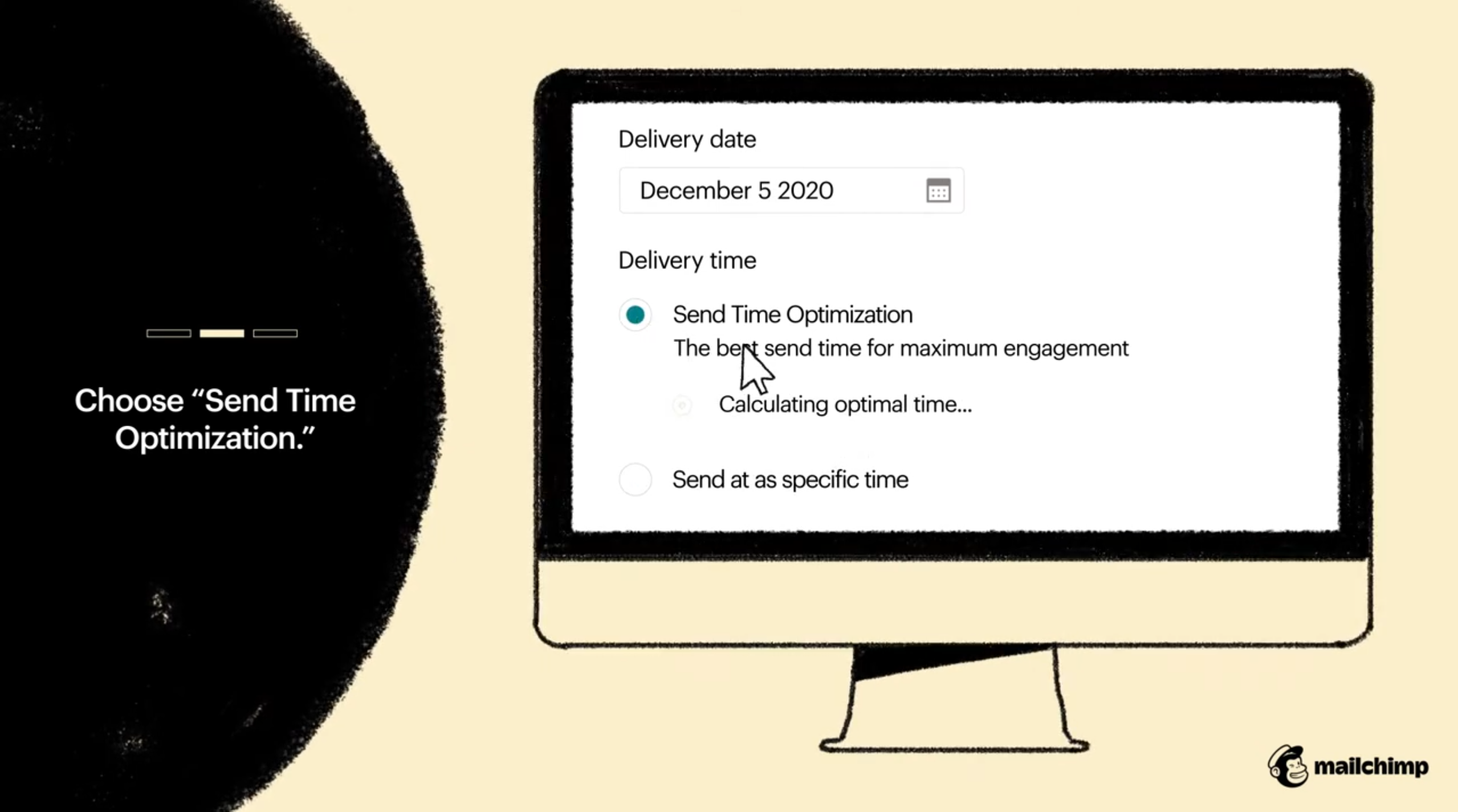
The agent also dynamically assembles content blocks based on past engagement, meaning two subscribers can receive entirely different versions of the same newsletter based on what they've previously responded to.
This isn't a tool you prompt. It runs continuously, analyzes behavior, and optimizes automatically. The marketer sets the campaign, and the agent handles when and how it reaches each person.
❓ For small businesses: Emma handles the full email workflow, not just send-time optimization but also strategy, copywriting, segmentation, and automation sequences. Most small businesses don't have an email list that's being regularly used. Emma's first job is usually getting that list working at all before optimizing it. The Mailchimp example shows what consistent, intelligently timed email can do for open rates; Emma builds those campaigns from scratch.
5. Paid Advertising: Meta Advantage+ and AI-Targeted PPC
Retail advertisers | Meta Advantage+ / AI-targeted PPC | 10% to 25% improvement in ROAs |
Meta's Advantage+ campaign system uses AI agents to automate various aspects of paid advertising. Rather than defining specific audiences manually, for example, advertisers set the objective and the agent identifies who to target, when to show the ad, and which creative performs best.
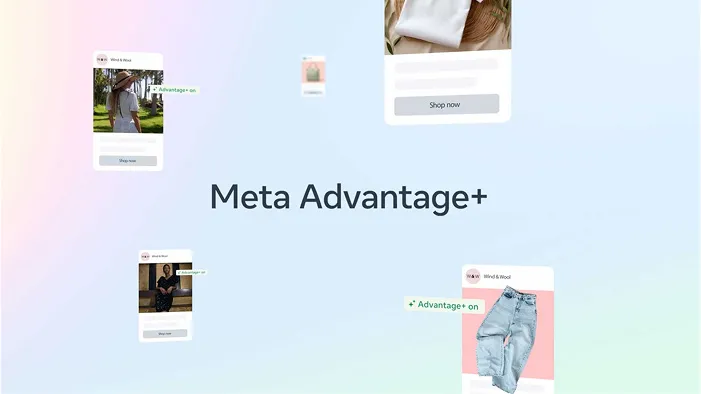
Retailers using AI-targeted PPC campaigns have reported 10% to 25% improvements in return on ad spend compared to manually managed campaigns.
The agent is making ongoing optimization decisions that would require a specialist to do manually. The budget gets reallocated to winning audiences in real time, underperforming ads get paused, and the human sets the budget and objective. Everything else is handled by the agent.
❓ For small businesses: Gabriel creates and manages complete ad campaigns across Google and Meta, including audience targeting, ad copy variations, and real-time optimization. Every campaign goes through expert human review before launch, catching the compliance and strategy issues that cause most small business ad campaigns to underperform or get rejected. The enterprise-level automation is built in; you just set the objective and budget.
6. Sales Outreach: AI SDR Agents
B2B companies using Warmly and similar platforms | AI SDR agents | Autonomous prospecting at scale |
AI sales development representative (SDR) agents are one of the fastest-growing categories of agentic AI in 2026. These agents monitor intent signals (site visits, job changes, and LinkedIn activity), then initiate personalized outreach across email and chat, qualify leads, and book meetings without rep involvement.
The best implementations don't replace human reps; they handle the prospecting volume that would otherwise require a large SDR team, then hand off warm leads to humans for the close.
The practical result for B2B teams is infinite outbound capacity without proportionally scaling headcount. A single rep can oversee an agent handling hundreds of simultaneous outreach sequences, stepping in when a conversation reaches a decision point.
7. Website Optimization: AI-Powered CRO
Zalando | Agentic AI discount and timing optimization | 20% reduction in cart abandonment |
Zalando deployed an agentic AI system to autonomously determine the best timing and format for promotional discounts based on real-time user behavior. Rather than running manual A/B tests and waiting for results, the agent continuously tested different offer types and delivery methods, adapting to behavioral signals across the customer journey.
The result was a 20% reduction in cart abandonment during seasonal sales campaigns.
This is different from traditional CRO. Zalando's agent wasn't generating a report for a human to act on later. It was identifying a drop-off signal, testing a response, and measuring the outcome, continuously, without a team of analysts running each cycle.
For small businesses: Zalando's system required significant engineering investment. Zaturn’s AI website agent, Sam, covers the audit and recommendation layer that most small businesses have never done at all, identifying where visitors are dropping off, what's causing it, and what to fix first. Most sites have 8 to 12 conversion barriers that have never been looked at. Fixing even the quick wins typically moves the conversion rate by 1 to 2 percentage points, which compounds across every other marketing investment.
What Do These AI Agent Examples Have in Common?
Looking across all seven examples, you’ll notice the following patterns:
Specialization over generalization: Every effective AI agent is built for a specific function. Klarna's agent handles customer service, Adore Me's agents handle content production, and Meta's Advantage+ handles ad optimization. None of them tries to do everything.
Human oversight stays in the model: The Klarna example shows what happens when you remove it; edge cases fail and quality drops. The businesses seeing the best results use AI for production and humans for judgment.
The ROI is in consistency, not one-time performance: Klarna's $60 million saving came from handling millions of routine interactions continuously. Mailchimp's open rate improvement came from sending at the right time every time. The value is in never having an off week.
Small businesses can access the same concept: The enterprise examples required custom builds and large teams. The underlying function (consistent, autonomous marketing execution) is accessible at a fraction of the cost through purpose-built platforms.
AI Agent Examples for Marketing: Zaturn’s Six AI Agents
Zaturn is an AI marketing platform built around six specialized agents. Each one handles a specific marketing function, draws from the same central brand context, and submits work for your approval before anything goes live.
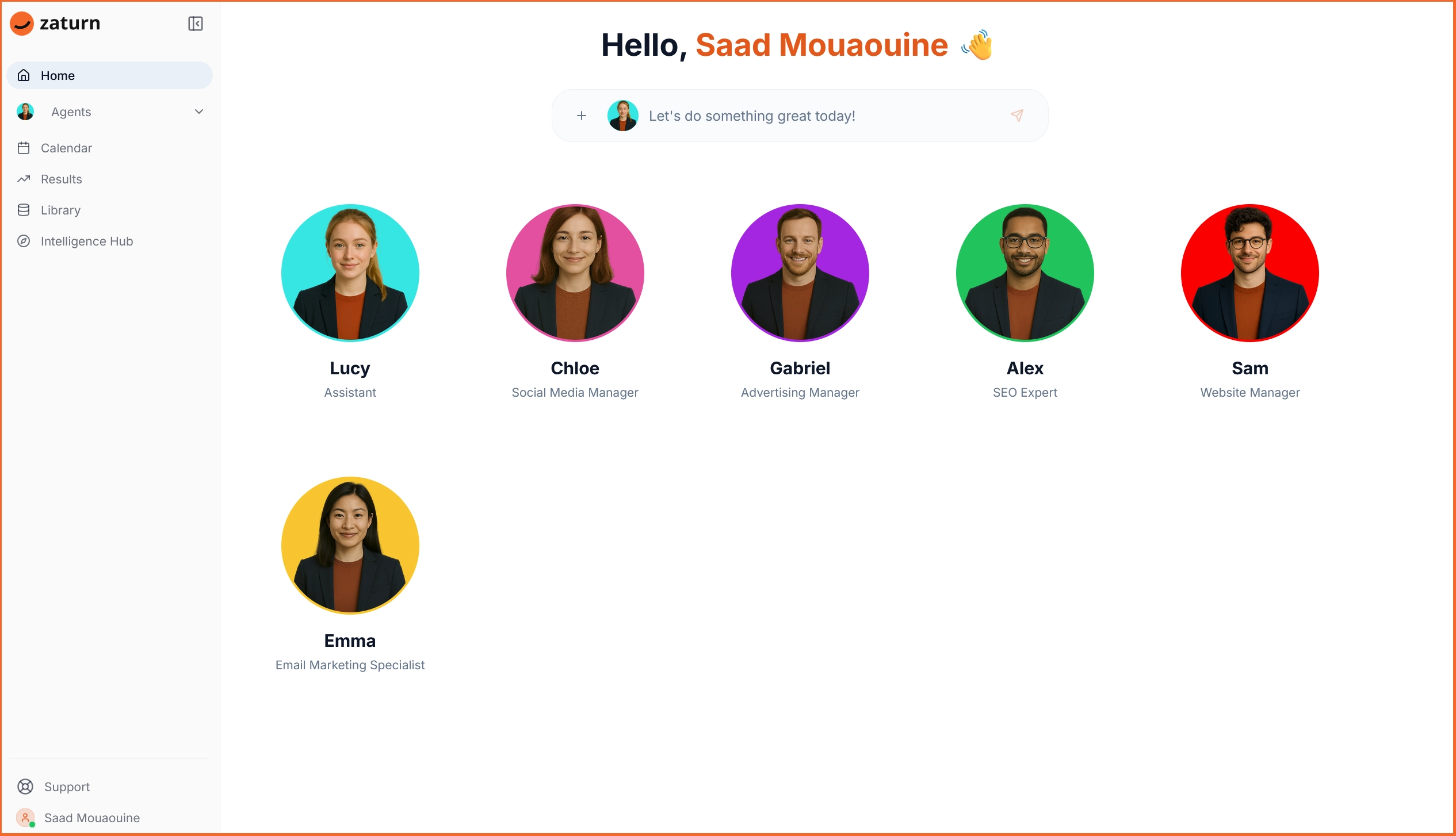
Agent | Function | Features |
|---|---|---|
Chloe | Handles content calendar, captions, visuals, and scheduling across LinkedIn, Facebook, Instagram, X | |
Emma | Manages strategy, copywriting, segmentation, and automations. Integrated with Mailchimp, Brevo, Outlook, and Gmail | |
Alex | Runs technical audits, keyword research, blog content, and rank tracking via Google Search Console | |
Gabriel | Creates media plans, ad copy, audience targeting, and monitors campaigns across Google and Meta | |
Sam | Audits conversion barriers and delivers prioritized recommendations with projected lift estimates | |
Lucy | General Coordinator | Routes requests and answers platform questions |
Try Zaturn for free for 14 days. No credit card is required. Most users have their first week of social content and an email campaign ready to review in their first session.