AI Marketing for Restaurants: Fill More Tables Faster
Use AI agents to handle social media, email campaigns, local SEO, ads, and website copy for your restaurant. Fill more table faster and focus your efforts and hospitality instead of marketing.
Before a new customer even walks through your door, they’ve already looked you up. They’ve checked your online presence and made their decision before they left the house.
That's the reality of restaurant marketing in 2026. Your online presence is the first impression, and the businesses staying visible are the ones using the AI marketing restaurants need to stay consistent without it consuming the hours that belong on the floor.
Here are the channels that actually drive covers and how to get started without a marketing background.
Short Answer
AI marketing for restaurants handles the content production and scheduling work that most restaurant owners should be doing but never have time for: social media, email campaigns, local SEO, and review management.
It doesn’t replace the hospitality that keeps people coming back, but it handles the digital work that gets them through the door in the first place.
Why Is Marketing Hard for Restaurant Owners?
Running a restaurant means being present, physically, for most of the day. You're managing the kitchen, handling staff, dealing with suppliers, and serving customers. Marketing gets pushed to "after service" and then never happens because by then you're exhausted.
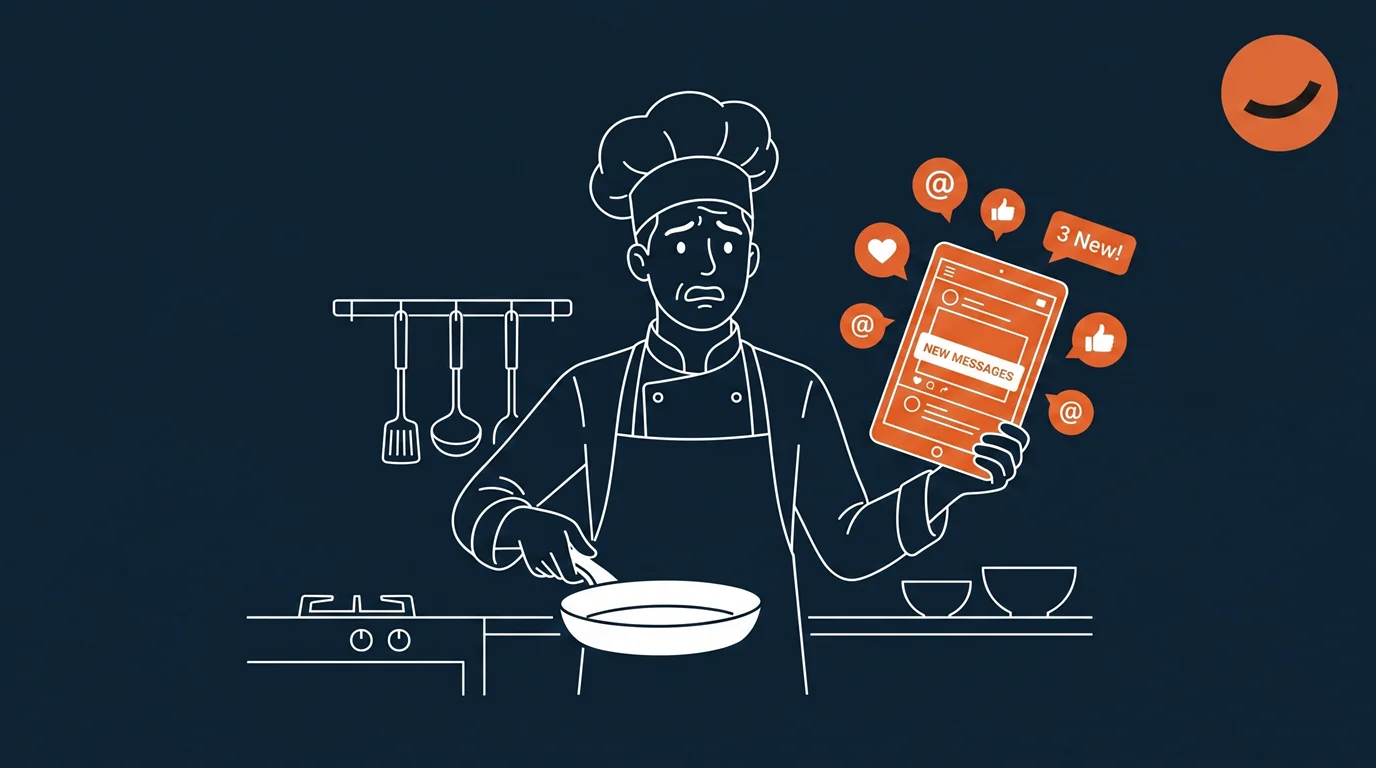
The result is a flurry of social posts during a quiet week, then two months of silence when things get busy. That inconsistency is damaging because the restaurants filling tables on a Tuesday night aren't necessarily better than yours. They're just more visible.
Here’s what the data says:
88% of diners search online before choosing a restaurant, and 72% of users trust online reviews as much as personal recommendations, according to Marketing LTB.
68% of people check a restaurant’s social media before deciding to visit, per Restroworks.
54% of diners discovered a new restaurant via social media in October 2025, according to Marketing LTB.
Restaurants with active social media strategies report an average 9.9% increase in direct revenue, per Deloitte Digital’s 2025 State of Social research.
63% of diners prefer restaurants with an actively updated Google Business Profile, per Marketing LTB.
79% of U.S. restaurant operators now use AI in some capacity, according to SevenRooms’ 2025 report.
The good news is that AI has made consistent restaurant marketing achievable for single-location owners and small groups, not just chains with dedicated marketing departments.
Which Marketing Channels Are Important for Restaurants?
Not every marketing channel is equally relevant for a restaurant. Here are the four that consistently move the needle.
Social Media
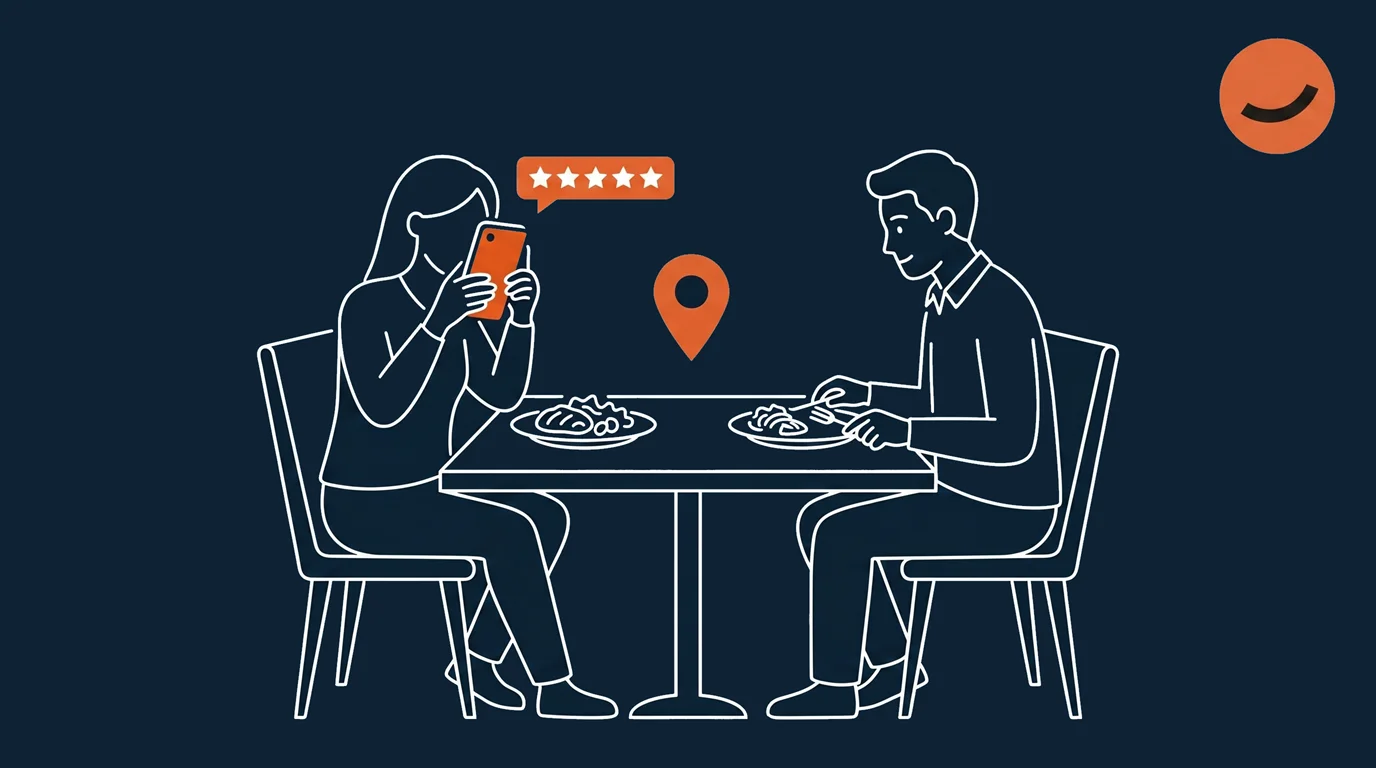
For restaurants, social media is where potential customers decide whether they want to come in. Instagram and TikTok in particular function as visual menus.
A well-shot plate of food, a 15-second behind-the-scenes clip from the kitchen, or a quick video of the atmosphere on a Friday night is the thing that make someone text a friend and say, "We should go here."
The challenge is that producing this content consistently, while also running a kitchen, is genuinely hard.
✅ An AI social media assistant handles the caption writing, hashtag research, and scheduling so your accounts stay active even during a hectic service week. The visual content itself still benefits from real photography and video, but the words, the planning, and the publishing cadence can all be automated.
Google Business Profile and Local SEO
When someone nearby searches "Italian restaurant" or "best brunch near me," Google's local pack shows three results before anything else. Those three spots drive an enormous amount of foot traffic.
Getting into them comes down to your Google Business Profile and the local SEO signals around your website.
✅ AI SEO tools audit your current setup, identify the specific search terms people are using in your area, help you build content targeting those terms, and keep your profile updated with accurate hours, photos, and menu information.
It’s not glamorous work, but 63% of diners specifically prefer restaurants with an actively updated Google Business Profile, and most restaurants leave it untouched for months.
Customer Reviews
72% of customers trust online reviews as much as personal recommendations. For a restaurant, your review profile on Google, Yelp, and TripAdvisor is a marketing asset (or a liability) that operates 24 hours a day whether you’re paying attention to it or not.
✅ AI can help you respond to reviews consistently and on-brand, draft requests to satisfied customers asking them to share their experience, and flag negative reviews that need a human response quickly.
The actual review experience is yours to deliver. What AI handles is making sure that experience is reflected online and that you’re actively managing how your reputation appears to potential customers researching where to eat.
Getting someone through the door once is hard. Getting them back is where the economics of a restaurant really work. Email is the most cost-effective way to drive repeat visits through the following:
Birthday offers,
Seasonal menus,
Exclusive events for subscribers, and
Monthly newsletters that keep your restaurant in someone's mind between visits.
✅ Most restaurants have a customer email list they're barely using. An AI email assistant turns that list into an active retention tool by writing the campaigns, building the automation sequences, and handling the personalization.
A birthday email sent a week before someone's celebration, with a specific offer, converts at a rate that no social media ad can match because it reaches someone who already likes you, at exactly the right moment.
What AI Marketing Cannot Do for Restaurants
The restaurants that get the most from AI marketing are honest about where it helps and where the line is.
Hospitality and Experience
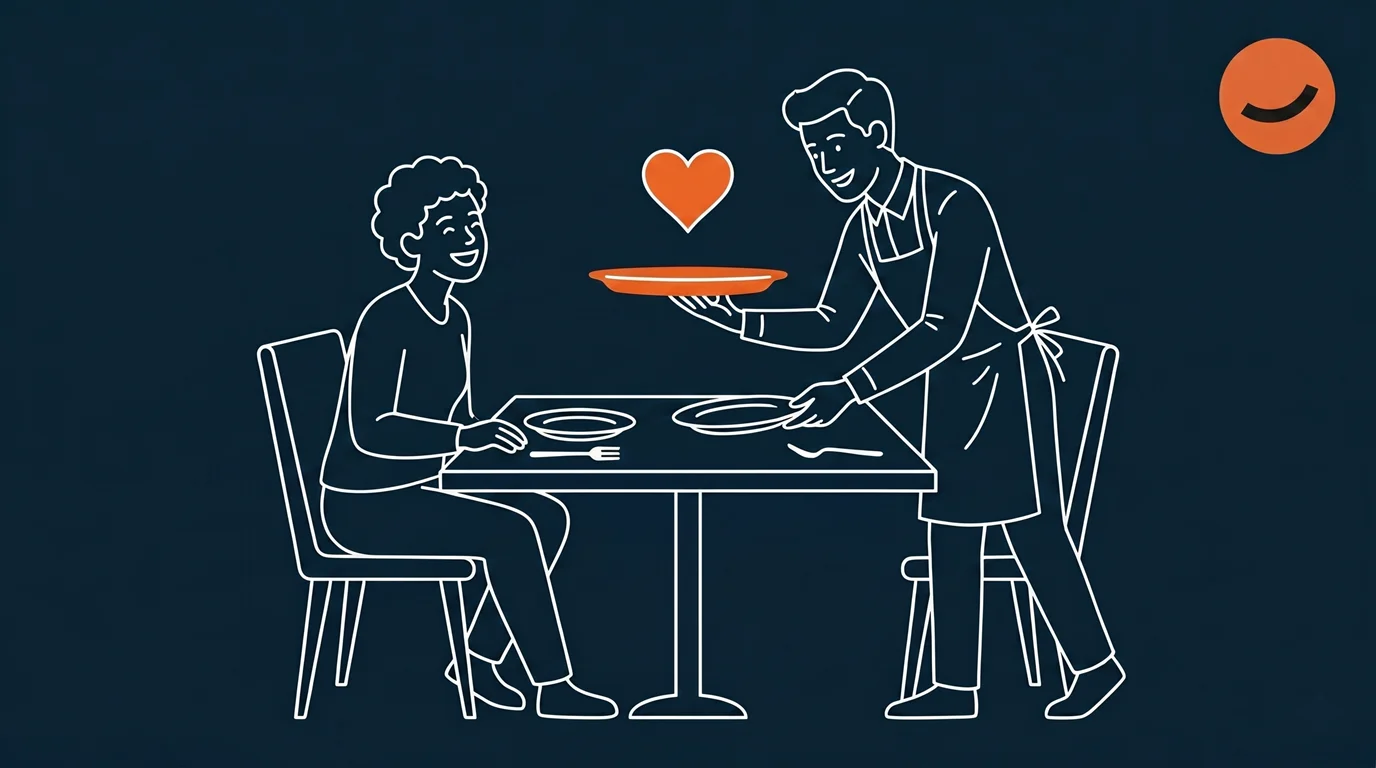
AI builds the visibility that brings people in. The food, the service, and the atmosphere are what make someone come back and tell their friends.
No amount of good social media saves a bad dining experience, and no amount of AI will generate the genuine warmth that makes a neighborhood restaurant feel like home.
Crisis and Reputation Management
When a bad review goes up, when something goes wrong during a service, or when a customer complaint reaches social media, you need a thoughtful, personal response.
An AI-generated reply to a genuine complaint can make things considerably worse. Use AI to help draft the response if you need to, but the judgment about what to say and how to say it has to be yours.
Local Community Presence
Marketing tools can’t replicate neighborhood event sponsorships, being known by name at the farmers market where you source your produce, or showing up for the community in ways that build genuine loyalty.
This is also where independent restaurants have a real advantage over chains, and it’s worth protecting.
How to Set Up AI Marketing for Your Restaurant
The most effective approach is to start with a channel that has the most immediate impact on foot traffic (that’s social media and your Google Business Profile) and build from there.

Week 1: Fix Your Basics
Before any content goes out, make sure the basics are right. Update your Google Business Profile with accurate hours, current photos, and your menu.
If this hasn't been touched in a while, fixing it alone will have a measurable impact on how often you appear in local searches. Here’s how most AI marketing platforms (including Zaturn) handle it:
Connect your social accounts (Instagram and Facebook as a minimum) to your AI marketing platform.
Build your brand profile by inputting your restaurant’s name, cuisine type, location, tone of voice, and the kind of customers you want to reach. The more specific you are here, the better the content that comes out.
Set your posting schedule and let the platform generate your first two weeks of content. Review each post, make edits where the voice needs adjusting, and approve what fits.
Month 1: Get Social Media Running Consistently
Three to five posts a week is the target for most restaurants. A mix of content types performs better than posting only food photos:
Behind-the-scenes kitchen content,
Team introductions,
Seasonal specials,
Local supplier stories, and
Customer photos all tend to outperform straight product shots in engagement.
The goal for month one is simply consistency. Two reliable posts a week, every week, builds more momentum than a burst of daily posting followed by a long silence. If the budget permits, consider hiring videographers to create promotional videos for Instagram or TikTok.
Month 2: Activate Your Email List
If you have customer emails from reservations, loyalty programs, or a sign-up form, this is when you put them to work.
Start with a welcome email for new subscribers, then a monthly newsletter with upcoming specials, events, or seasonal menu changes. Add a birthday automation if your platform supports it; it’s one of the highest-converting emails a restaurant can send.
Month 3: Local SEO and Paid Promotion
Ask your AI SEO tool to audit your website and identify the local search terms your area's diners are actually using.
Publish two or three pieces of content targeting those terms: a neighborhood guide, a "best brunch in [city]" post, or a seasonal menu feature.
For paid promotion, a small Facebook or Instagram ad budget ($5 to $10 per day) targeting people within a few miles of your location can meaningfully increase covers during a slower period.
How Can Zaturn Help With AI Restaurant Marketing?
Zaturn is an AI marketing platform with six agents covering the full restaurant marketing workflow.
The Intelligence Hub stores your brand voice, visual assets, and audience details centrally, so every agent (social media, email, SEO, advertising) produces content that sounds like the same restaurant. Everything goes through your approval queue before it goes anywhere.
Chloe (Social Media): Plans your content calendar, writes platform-specific captions for Instagram, Facebook, and other channels, generates on-brand visuals, and schedules posts directly to your connected accounts. She can work from a dish description, a photo you upload, or a seasonal event, and she formats each post for the platform it's going to.
Emma (Email): Builds your email campaigns from scratch, including welcome sequences for new subscribers, monthly newsletters, birthday automations, and promotional sends around events or seasonal menus. She integrates with your existing email platform rather than requiring you to switch.
Alex (SEO): Audits your website's technical SEO, researches the local search terms your customers are actually using, writes content targeting those terms, and helps keep your Google Business Profile updated and optimized.
Gabriel (Advertising): Creates media plans for event promotion and local reach campaigns, writes ad copy variations tailored to a restaurant audience, and monitors performance across Facebook, Instagram, and Google.
Sam (Website/CRO): Reviews your website for anything that's getting in the way of reservations, such as unclear calls to action and missing trust signals, and delivers specific recommendations with projected impact.
Lucy (General): Routes your requests to the right agent, answers questions about the platform, and helps configure the Intelligence Hub during setup so every agent starts with the right understanding of your brand.
Plan
Monthly Price
What's Included
Starter
$69/mo.
All 6 agents, all integrations, 1 workspace, 1 user, unlimited content, email support, 14-day free trial
Growth
$129/mo.
Everything in Starter, 3 workspaces, 3 users, priority support, onboarding call, 5x more usage
Custom
Talk to Sales
Unlimited campaigns, white-label options, dedicated success manager, 4hr support, custom integrations
What Does Restaurant Marketing Actually Cost?
Here’s how Zaturn compares to the other options, including marketing agencies.
Option | Monthly Cost | What You Get |
|---|---|---|
Marketing agency | $1,500 to $4,000 | Social media + some email, limited local SEO, usually 1 to 2 channels |
Part-time social media manager | $800 to $2,000 | Social media only, no email or SEO |
Freelance content creator | $500 to $1,500 | Photo/video content, no strategy or scheduling |
DIY (Canva + ChatGPT) | $20 to $50 + 6 to 10 hours/week | Inconsistent output, time taken from running the restaurant |
Zaturn Starter | $69/mo. | All 6 agents covering social, email, SEO, ads, and website |
You didn’t open a restaurant to spend your evenings writing Instagram captions. Start your free 14-day trial and let Zaturn bring the customers. You take care of the rest.