AI Real Estate Agent Assistant: Stop Busywork, Sell More Homes
Most agents spend hours each week on tasks that don't require a license: writing listing descriptions, drafting follow-up emails, or posting on social media. An AI real estate agent assistant handles that work automatically, so you can put those hours back into showings and client relationships.
The median Realtor spends 35 hours a week working. A big chunk of that goes to tasks that don't require a license: writing listing descriptions, drafting follow-up emails, posting on social media, and setting up ad campaigns.
An AI real estate agent assistant handles that work. It doesn't replace the relationship side of real estate. Instead, it takes care of the repetitive, text-heavy tasks so you can focus on showings, negotiations, and the things that actually close deals.
Short Answer
An AI real estate agent assistant is a tool that automates marketing and content tasks like writing listings, sending nurture emails, posting on social media, and running ad campaigns.
The best ones don't just suggest content; they execute it. You review and approve, and the rest runs automatically.
What Is an AI Real Estate Agent Assistant?
An AI assistant for real estate agents is software that uses AI to speed up or automate real estate marketing and content tasks. Think listing descriptions, social captions, email sequences, and ad copy, all handled without you starting from scratch each time.
That said, not all AI assistants work the same way. Some are standalone writing tools. Others are full marketing platforms with multiple agents, each focused on a specific channel. Here's the difference in practice:
Type | What it does | What it doesn't do |
|---|---|---|
AI writing tool | Generates content when you ask for it | Doesn't schedule, send, or publish anything |
Email or social platform with AI | Assists with content inside one channel | Covers only that channel, still requires manual work |
AI marketing agent platform | Plans, creates, and executes across multiple channels after your approval | Doesn't replace your judgment or client relationships |
👍 Zaturn falls into the third category. Instead of one generic assistant, you get six specialized AI agents, each focused on a different part of your marketing workflow.
How Can an AI Assistant Help Your Real Estate Business?
The biggest benefit is straightforward: time.
Most agents spend hours each week on tasks that don't require their expertise. AI tools handle those tasks so you can put that time back into client work.
Here's what a real estate AI assistant typically takes off your plate:
Listing descriptions: Give it the property details and it writes a polished, SEO-friendly description in seconds. The tone adjusts for the property type and target buyer.
Social media content: Captions, post ideas, and image prompts for Instagram, Facebook, LinkedIn, and more, all based on your listings, market updates, or brand style.
Lead follow-up sequences: Automated emails and nurture campaigns that keep prospects engaged over a long sales cycle, without you manually checking in every few weeks.
Ad copy and campaigns: Multiple ad variations for Facebook and Google, tested against each other so you find out what works without guesswork.
SEO content: Neighborhood guides, blog posts, and optimized web pages that help your site rank for the searches buyers are actually running.
The result is that you spend less time at a keyboard and more time in front of clients. For solo agents and small brokerages, that shift can be the difference between a good month and a great one.
Real-Life Use Cases for a Real Estate AI Assistant
Here are valid tasks your AI marketing assistant can take over to free up time for closing deals.
1. Writing Listing Descriptions
Writing a strong listing description takes time. You need the right tone, the right features highlighted, and copy that speaks to your target buyer, not a generic template.
With an AI assistant, you share the property details and get a draft back in seconds.
✅ Pro Tip: The best platforms go beyond templates. They adjust tone for each property and highlight the features most likely to resonate with the buyer profile you're targeting.
2. Lead Follow-Up and Nurturing
Most leads don't convert on first contact. In fact, a buyer looking at listings in spring might not be ready to move until fall. That's a long time to stay top of mind without burning yourself out on manual check-ins.
AI assistants handle this with automated nurture sequences. They send timely, personalized messages at the right intervals, so you stay in the conversation without having to manage it yourself.
As a result, you lose fewer leads to agents who simply showed up more consistently.
3. Social Media Content at Scale
Keeping Instagram, Facebook, and LinkedIn active takes real effort. After a full day of showings, writing a caption is the last thing most agents want to do.
An AI assistant changes that. You share a listing's address, price, and key features, and it creates platform-specific posts: a carousel-style caption for Instagram, a community angle for Facebook, or a market-insight framing for LinkedIn.
Beyond listings, it can also build content calendars, share market updates, and create neighborhood spotlights.
4. Ad Campaigns for Listings and Lead Generation
Running paid ads without experience is expensive. Poor targeting and weak copy burn through budget fast.
An AI advertising agent builds the campaign structure, writes multiple copy variations, and recommends audience targeting. For listing ads, it focuses on the property's strongest selling points.
For lead generation, it creates campaigns designed to capture seller leads ("Get your free home valuation") and buyer leads ("New listings in [area] — be the first to know").
Everything is tracked so you can see what's actually working.
5. SEO and Local Search Visibility
Most agents have websites that generate very little organic traffic. The fix is content. Specifically, neighborhood guides and local search pages that target what buyers actually search for.
An AI SEO agent handles this. It researches keywords relevant to your market, writes the content, and optimizes the technical elements like meta tags and schema markup.
Over time, your site starts appearing for the searches your buyers are running, without paid ads.
How Can Zaturn Help With AI Real Estate Marketing?
Zaturn gives you six AI agents. Each one specializes in a different part of your marketing workflow. They work independently but draw from the same brand context, so everything they produce sounds like the same agent.
Chloe — Social Media Agent
Chloe is Zaturn’s AI social media assistant. She creates platform-specific social content based on your listings and brand.
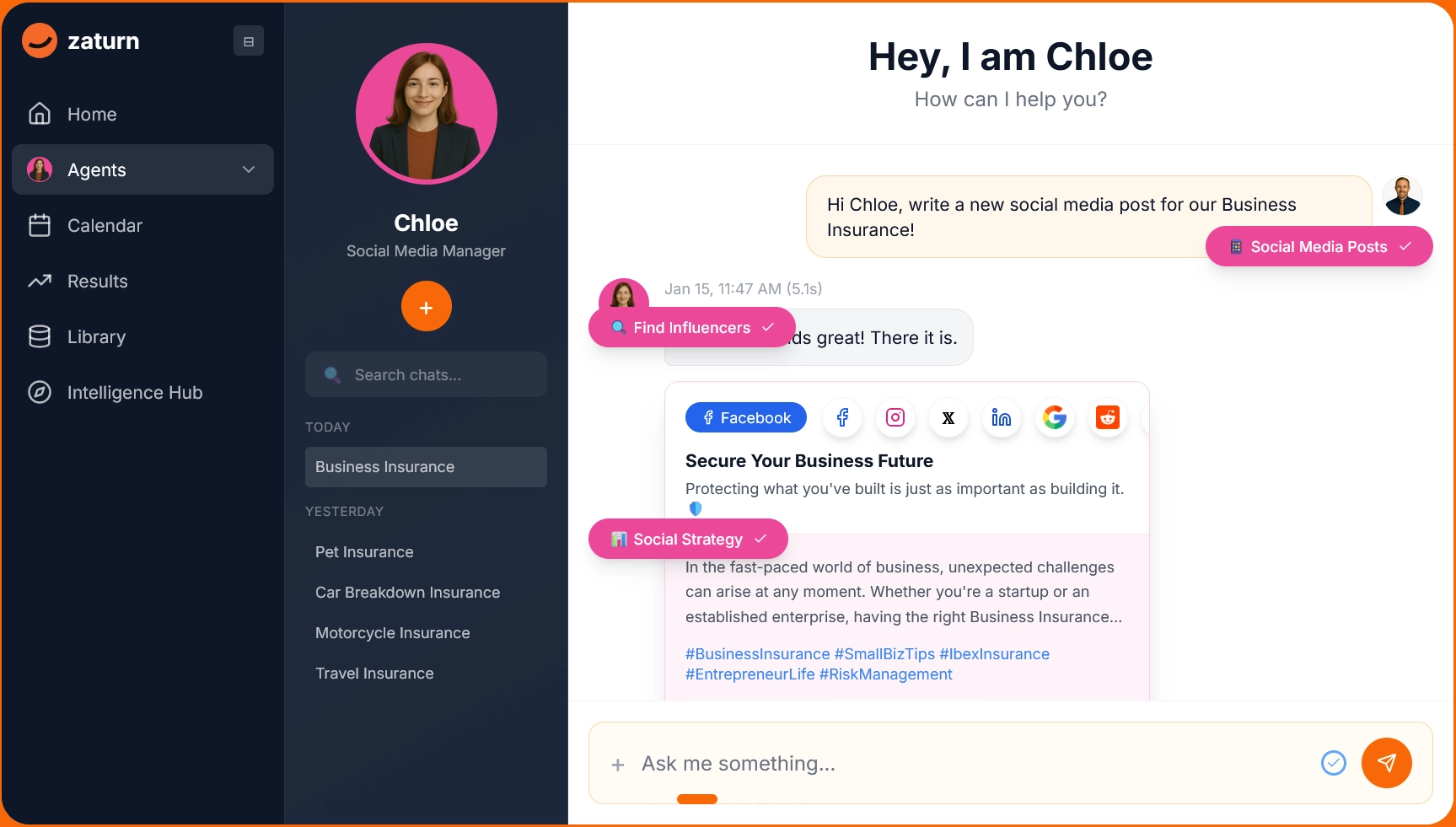
Share a property's address, price, bedrooms, and standout features, and she builds posts for each channel:
Instagram gets a carousel-style caption with hashtags.
Facebook gets a community-focused angle.
LinkedIn gets a market-insight framing.
TikTok gets a short, attention-grabbing hook.
Beyond listings, Chloe also builds content calendars, shares market updates, highlights neighborhoods, and creates engagement posts like polls and local business shoutouts.
She recommends posting times and suggests hashtag strategies for your market.
Emma - Email Marketing Agent
Emma is Zaturn’s AI email assistant. She manages your email marketing from strategy through to send.
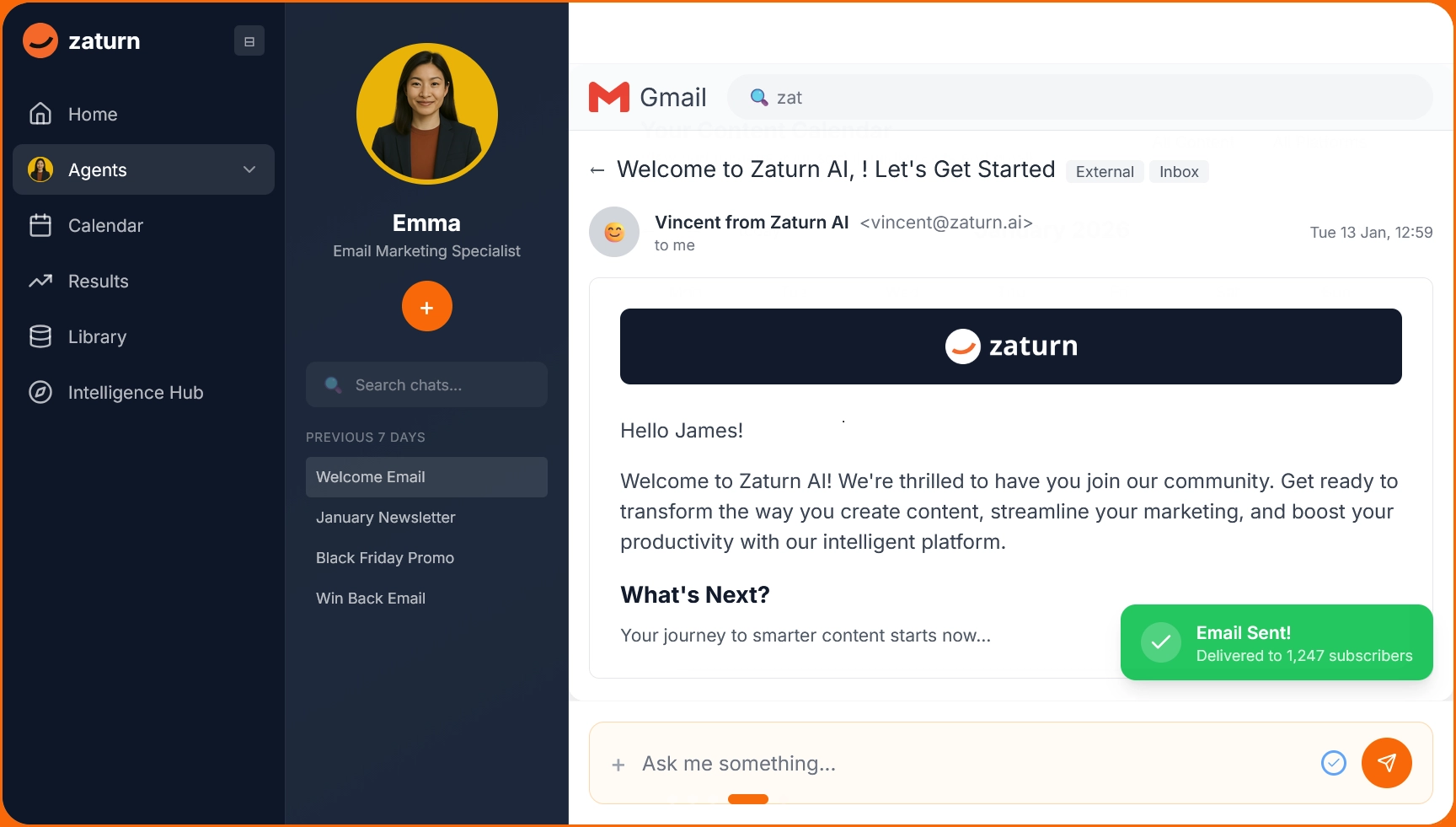
For real estate agents, her most useful workflows are:
Welcome sequence: Introduces you to new leads, shares your expertise, and sets expectations for working together.
Buyer nurture series: Sends listing alerts and market updates to keep you top of mind while clients are searching.
Seller nurture sequence: Delivers home valuation content, staging tips, and local market data to position you as the expert.
Past client newsletter: Monthly updates and community news that generate referrals from people who already trust you.
Emma writes the copy, builds mobile-friendly layouts with your brand colors and logo, creates subject lines, and adds the right CTAs. You share the campaign goal and she handles the rest.
Alex — SEO Agent
Alex focuses on getting your website found for the searches your buyers are running.
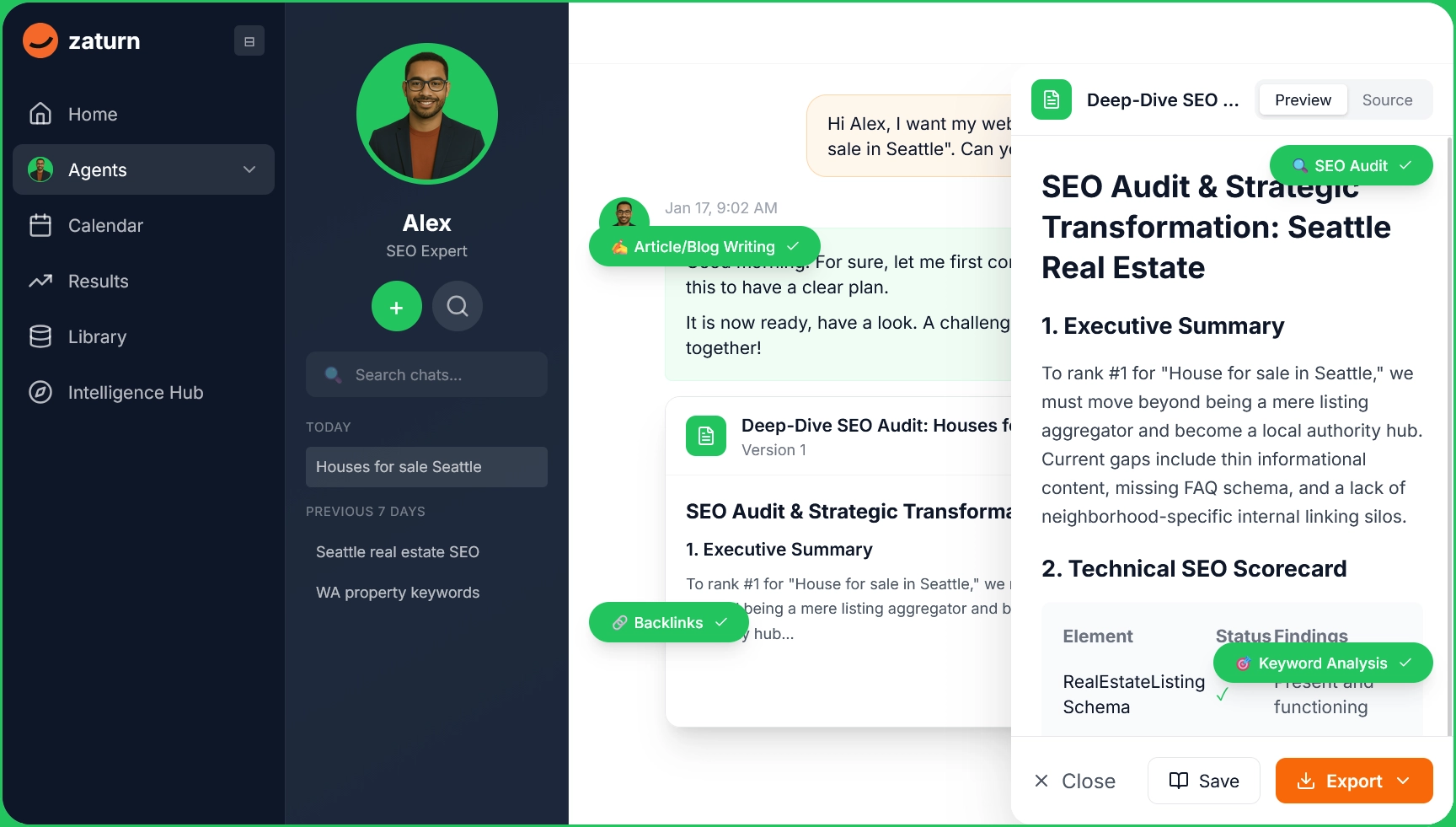
His work includes:
Technical SEO audits, including page speed, mobile friendliness, meta tags, and schema markup.
Keyword research specific to your market, such as terms like "luxury homes [city]" or "first-time buyer [area]"
Neighborhood guides and blog content that rank in local search.
Google Business Profile optimization, local citations, and review strategy.
Gabriel — Advertising Agent
Gabriel creates full ad campaigns for Facebook, Instagram, Google Search, Google Display, LinkedIn, and TikTok.
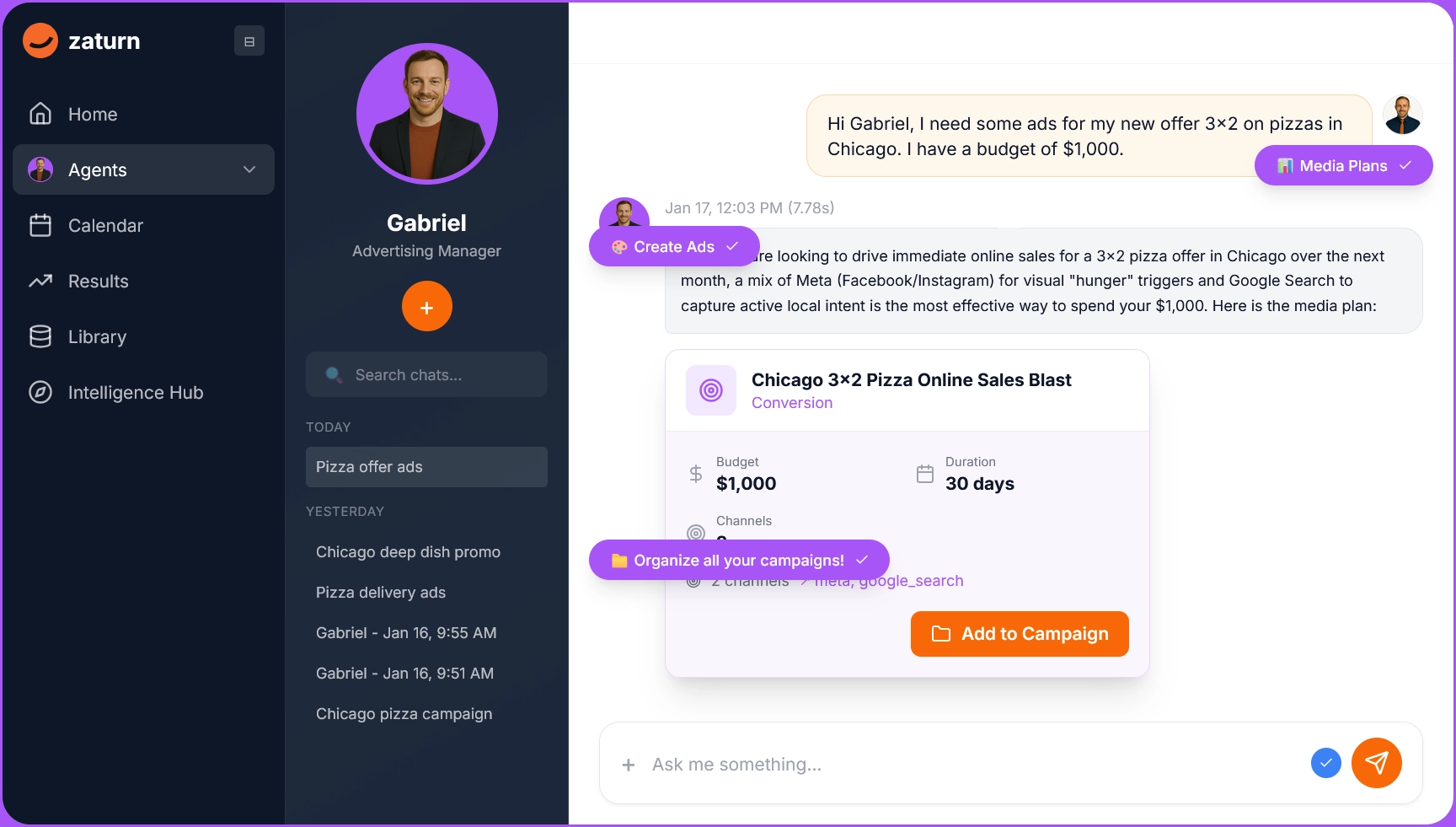
For each listing, he:
Builds a media plan with budget allocation and audience targeting.
Writes multiple ad variations with urgency-driven hooks.
Sets up A/B tests for headlines, hooks, and CTAs.
Adds UTM tracking so you can measure exactly what converts.
For lead generation, Gabriel creates seller lead campaigns ("Thinking of selling? Get your free home valuation") and buyer lead campaigns ("New listings in [area]—be the first to know").
Sam — Website and Conversion Agent
Sam reviews your website page by page to find anything stopping visitors from taking action. He then rewrites copy to convert more visitors into leads.
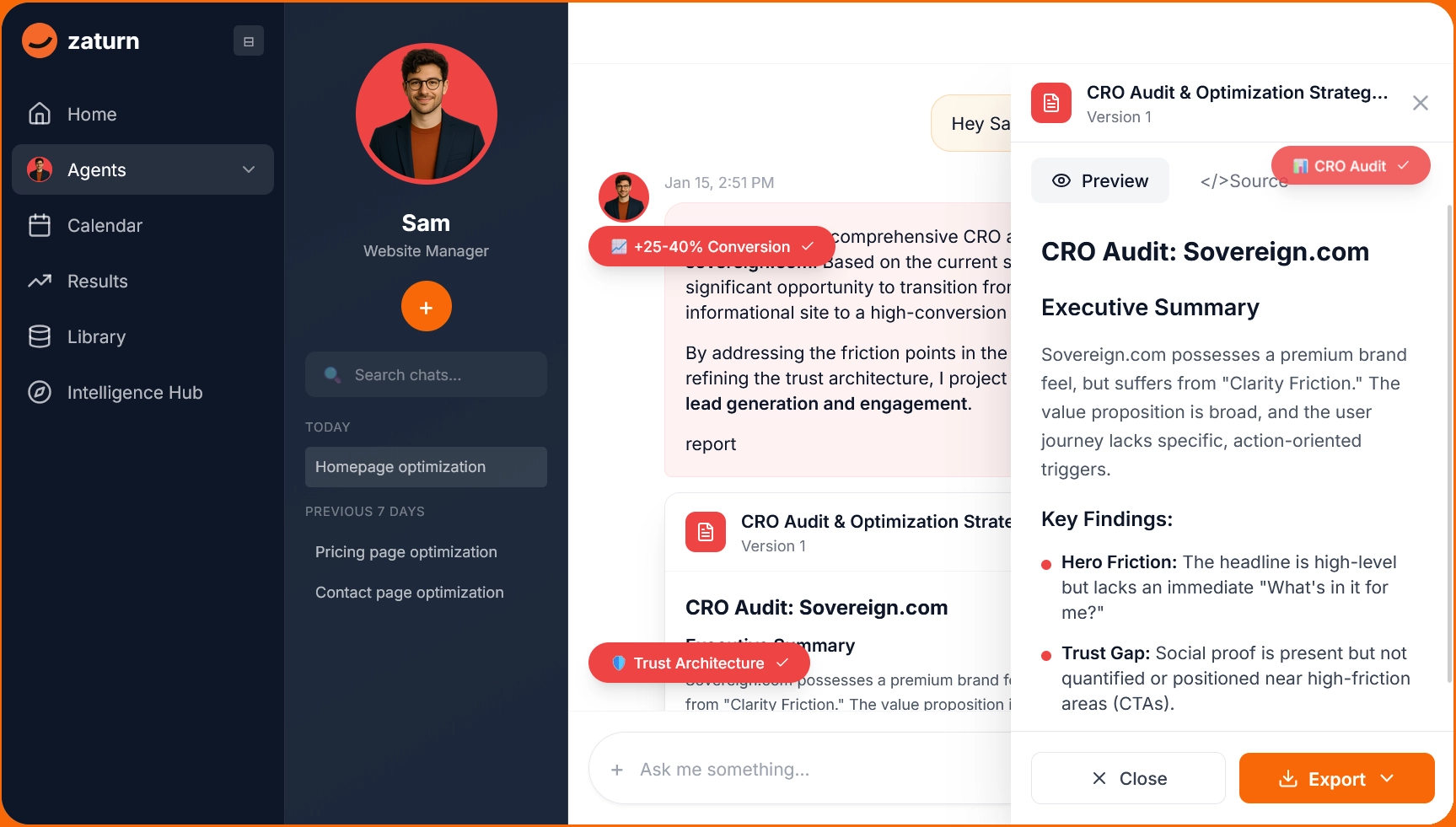
For real estate agents specifically, Sam makes sure your site:
Leads with who you help and what sets you apart.
Has easy-to-find lead forms for home valuations and listing alerts.
Showcases testimonials, sold properties, and awards in the right places.
Works well on mobile, where most buyers are searching.
He can also build landing pages for open houses, new developments, seller webinars, and neighborhood guides.
Lucy — General Assistant
Lucy is your starting point in Zaturn. She routes your requests to the right agent, answers platform questions, and helps you configure the Intelligence Hub during setup. If you're not sure which agent to use, start with Lucy.
How AI Real Estate Marketing Works With Zaturn
Here's what the first two weeks with Zaturn typically look like for a real estate agent.
Day 1
You sign up, connect your social accounts, and share your brand details: the areas you serve, your target clients, and your preferred tone.
Whether that's warm and neighborly or polished and professional, the agents adjust accordingly.
Day 2
Chloe prepares your first week of social content: listing posts, a market update, and a neighborhood spotlight.
Emma drafts a welcome sequence for new leads. Alex reviews your website and flags what needs attention.
You can look everything over before your first showing.
Day 5
You review, make any tweaks, and approve. Chloe schedules your posts. Emma activates the drip campaign.
Alex creates a neighborhood guide with keyword suggestions. Gabriel proposes a Facebook campaign for your latest listing.
Week 2
Everything runs in the background. Approvals take a few minutes because the agents already know your preferences.
Your social media stays active, emails go out on time, and your site starts gaining search visibility. You haven't had to cancel a single showing to write a caption.
✅ You don’t need technical skills or special prompts to use Zaturn. Just share the details (a property address, a campaign goal, or a target buyer), and the agents get to work.
How AI Assistants for Real Estate Agents Compare
Not all platforms are built for real estate. Here's how Zaturn compares to the tools agents are most likely to come across:
Tool | Starting Price | Real Estate Specific | Key Strength | What It Doesn't Do |
|---|---|---|---|---|
Zaturn | $69/mo. | Yes | Full execution across 6 channels: social, email, SEO, ads, website | Doesn't replace CRM or lead capture tools |
Lofty AI | Custom pricing | Yes | CRM with AI lead scoring and follow-up automation | Limited content creation and social media management |
Rechat | Custom pricing | Yes | Marketing execution platform built for brokerages | More enterprise-focused, less suited to solo agents |
Ylopo | Custom pricing | Yes | AI-powered lead generation and paid ad management | Focused on lead gen only, not broader marketing execution |
✅ Zaturn and tools like Lofty AI or Ylopo serve different parts of the workflow. CRMs manage the leads you already have. Zaturn creates the content that generates those leads in the first place. They work well together.
What Does a Real Estate AI Assistant Cost?
Most agents piece together their marketing from several different sources and sometimes hire marketing agencies. Here’s what that looks like compared to an all-in-one platform:
Option | Monthly Cost | What You Get |
|---|---|---|
Real estate marketing agency | $2,000 to $5,000 | Social + email + some ads. Usually 1 to 2 channels |
Part-time marketing assistant | $1,500 to $3,000 | Social + basic email — no SEO, ads, or website work |
Niche tools (multiple subscriptions) | $150 to $400 + your time | One channel each, no unified strategy, multiple logins |
DIY (Canva + free AI tools) | $20 to $50 + 8 to 12 hrs/week | Inconsistent results, time taken from selling |
Zaturn Starter | $69/mo. | All 6 agents: social, email, SEO, ads, website. Approval-based |
Losing one deal because your pipeline ran dry during a busy closing costs far more in commission than any marketing platform.
The argument for an AI assistant isn't just the price. It's the consistency that keeps leads coming in even when you're at your busiest.
Start automating the work that keeps you from selling today. Try Zaturn for free for 14 days — no credit card is required.